Resources
Blog.
Insights on AI search optimization, content strategy, and surviving the new era of search.
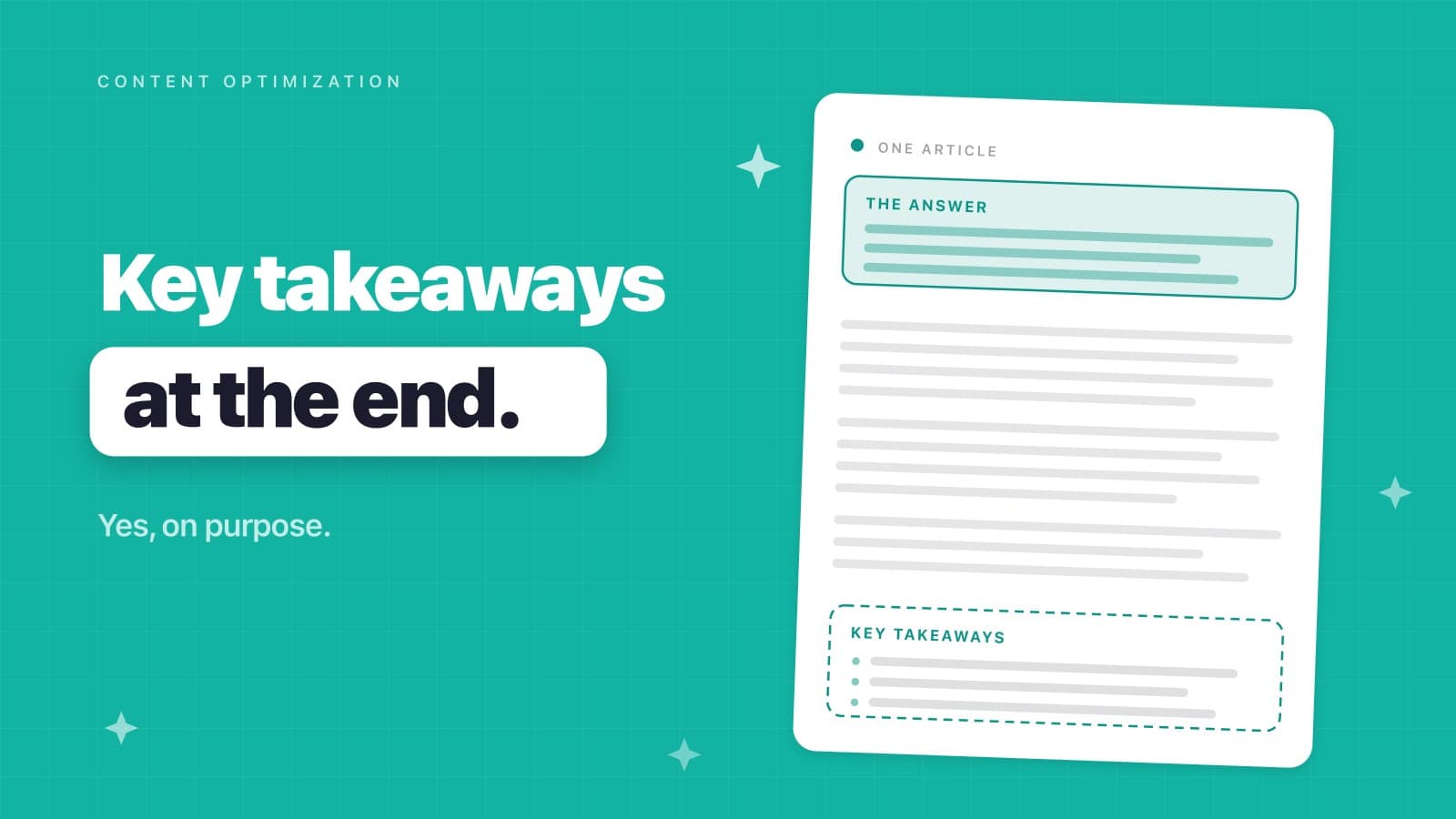
Why We Put Key Takeaways at the End (Yes, on Purpose)
Half the field now recommends a TL;DR at the top of every article. We read the same evidence and kept our takeaways at the bottom. Here is the argument for the top, why it does not settle the question, and the two places where our position falls apart.
 Lulu
Lulu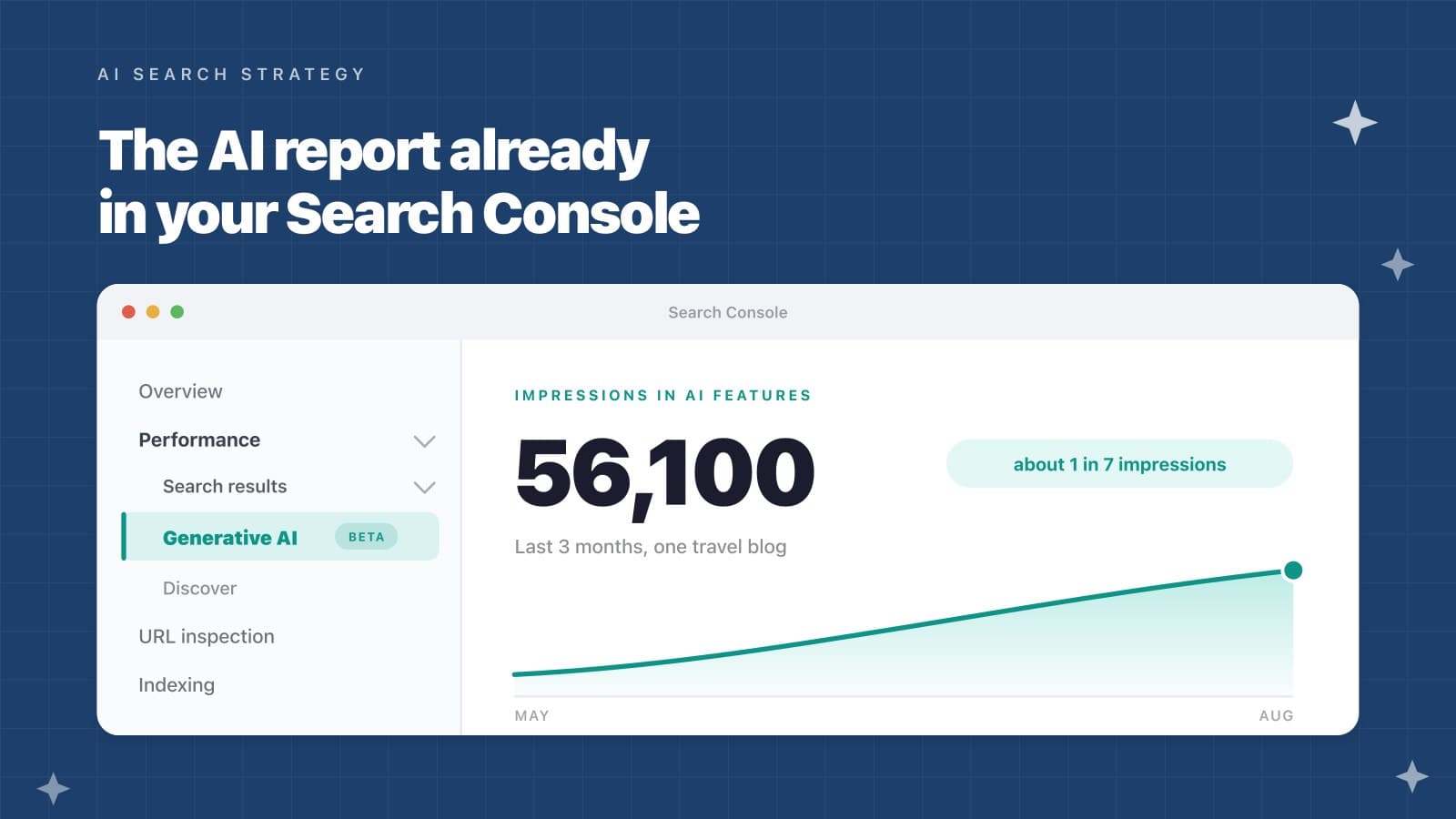
Google Now Shows You How Often AI Answers Use Your Site. Here’s Where to Find It.
Search Console has a Generative AI report that tells you how often your pages appear in AI Overviews and AI Mode. It hides one level down in the menu, so most bloggers have never opened it. Here is the click path, my own numbers from a travel blog, and what the report cannot tell you.
Lulu
Do You Have to Label AI-Assisted Blog Posts? What the EU AI Act Really Says
The EU transparency rules started applying on August 2, 2026, and the headlines made it sound like every blog post now needs an AI stamp. Here is what the law actually says about text, images, and who the rules are aimed at.
Lulu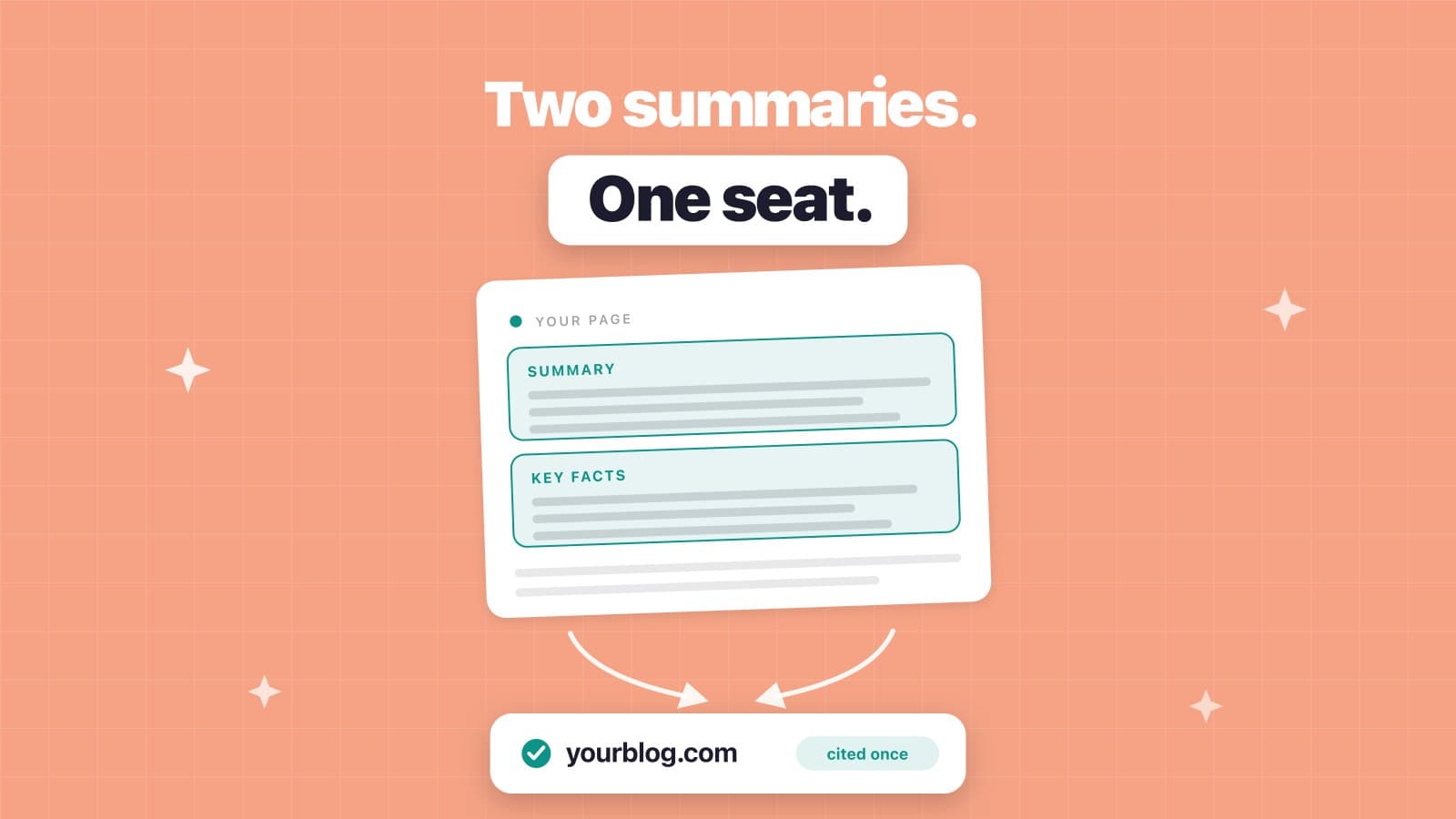
Your Page Can Only Be Cited Once. So Why Does It Have Two Summaries?
Lead summary, key facts box, jump links, and only then the article. The pattern is everywhere in 2026 GEO advice. Here is how retrieval actually works, and why the second summary competes with your first instead of adding anything.
 Josh
Josh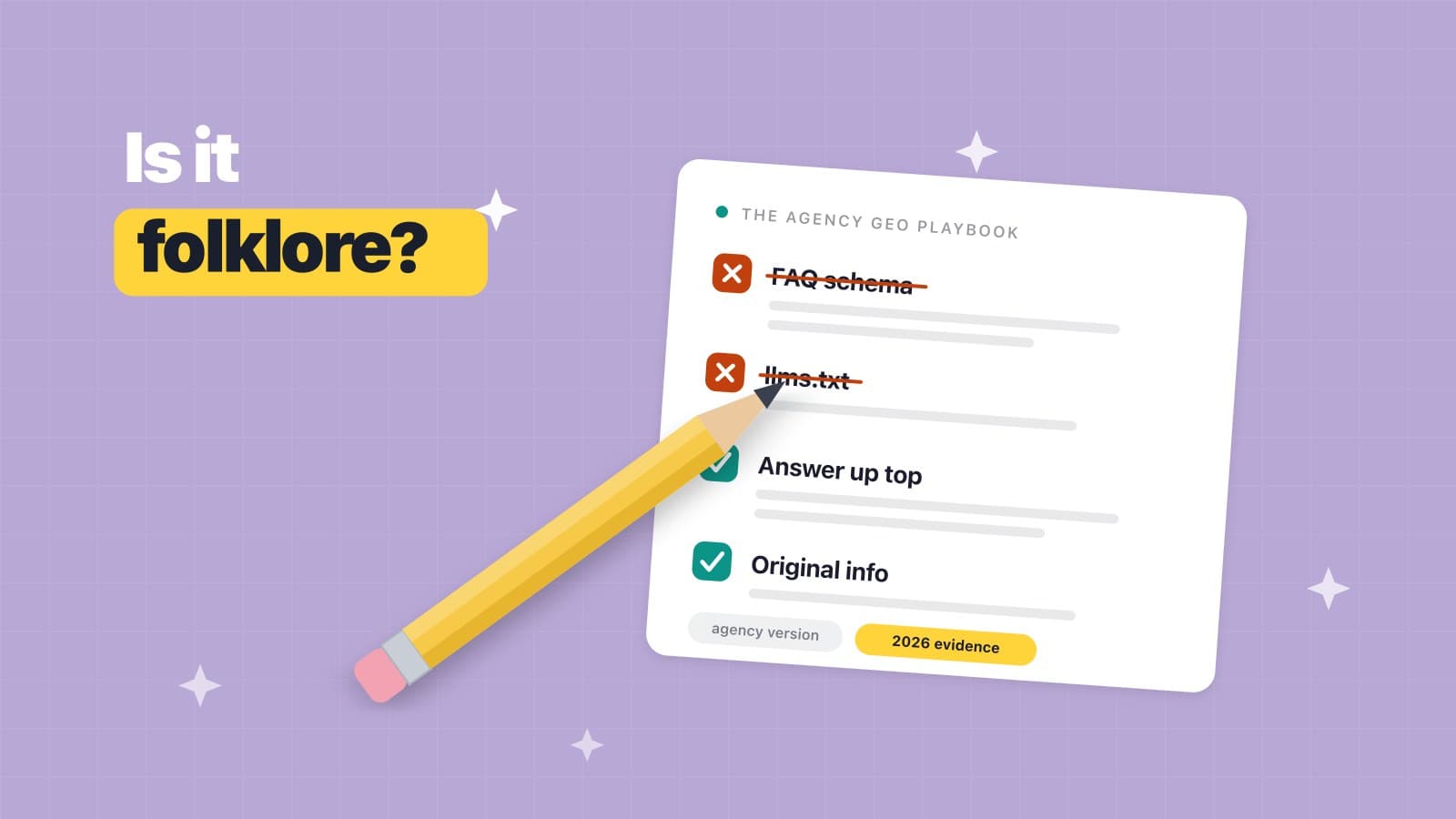
The GEO Checklist Your Agency Sent You: What’s Proven and What’s Folklore (2026)
FAQ schema, llms.txt, question headings, expert quotes, stacked summaries. I checked the standard 2026 GEO checklist against the published evidence, point by point. About half of it is folklore, and the half that works is simpler than the checklist suggests.
Lulu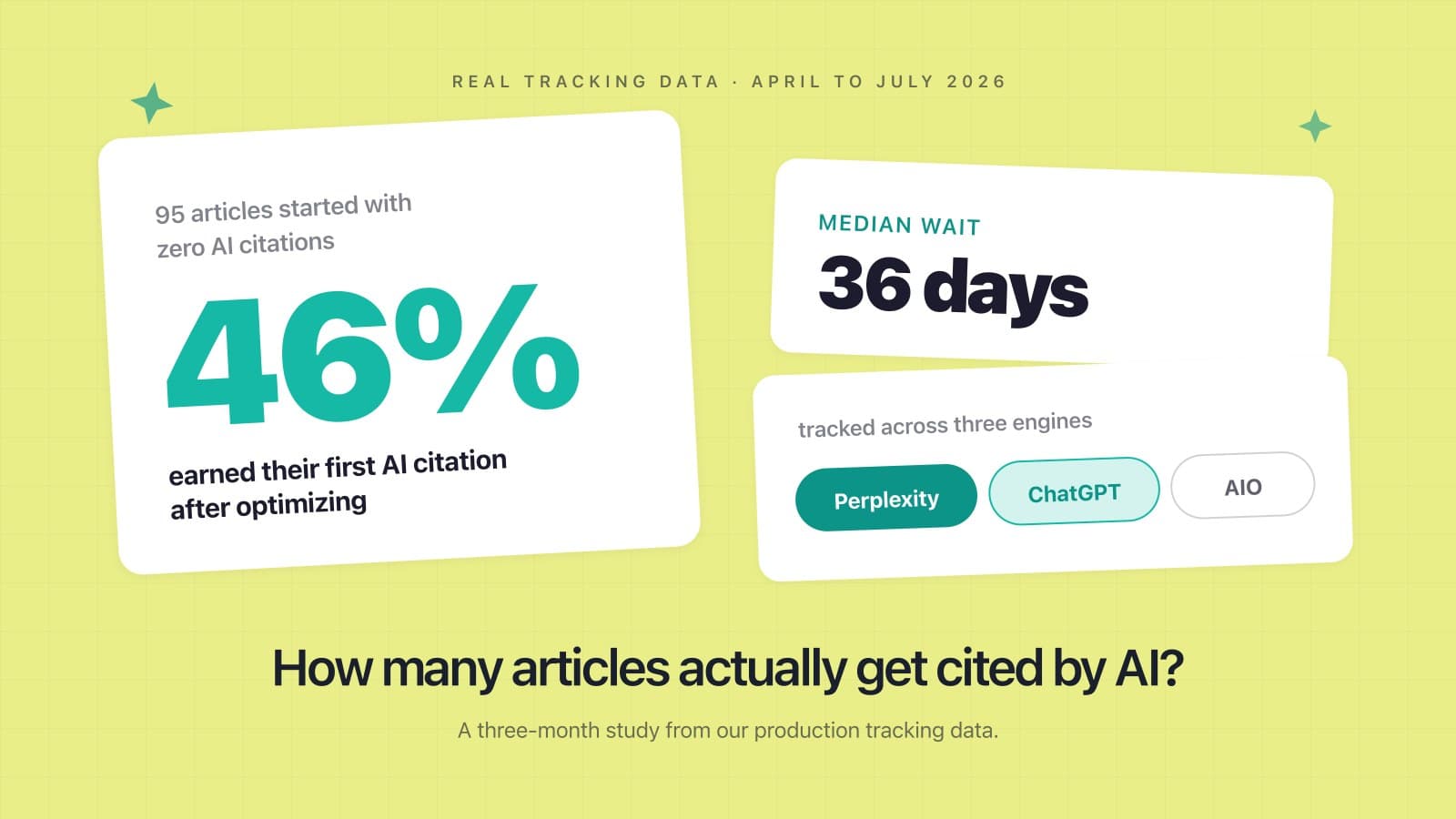
We Tracked 95 Blog Articles for 3 Months. This Is How Many Got Cited by AI.
46% of articles that had never been cited by AI earned their first citation after optimizing. Median wait: 36 days. Eight findings from 316 tracked keywords and 4,038 citation checks.
Lulu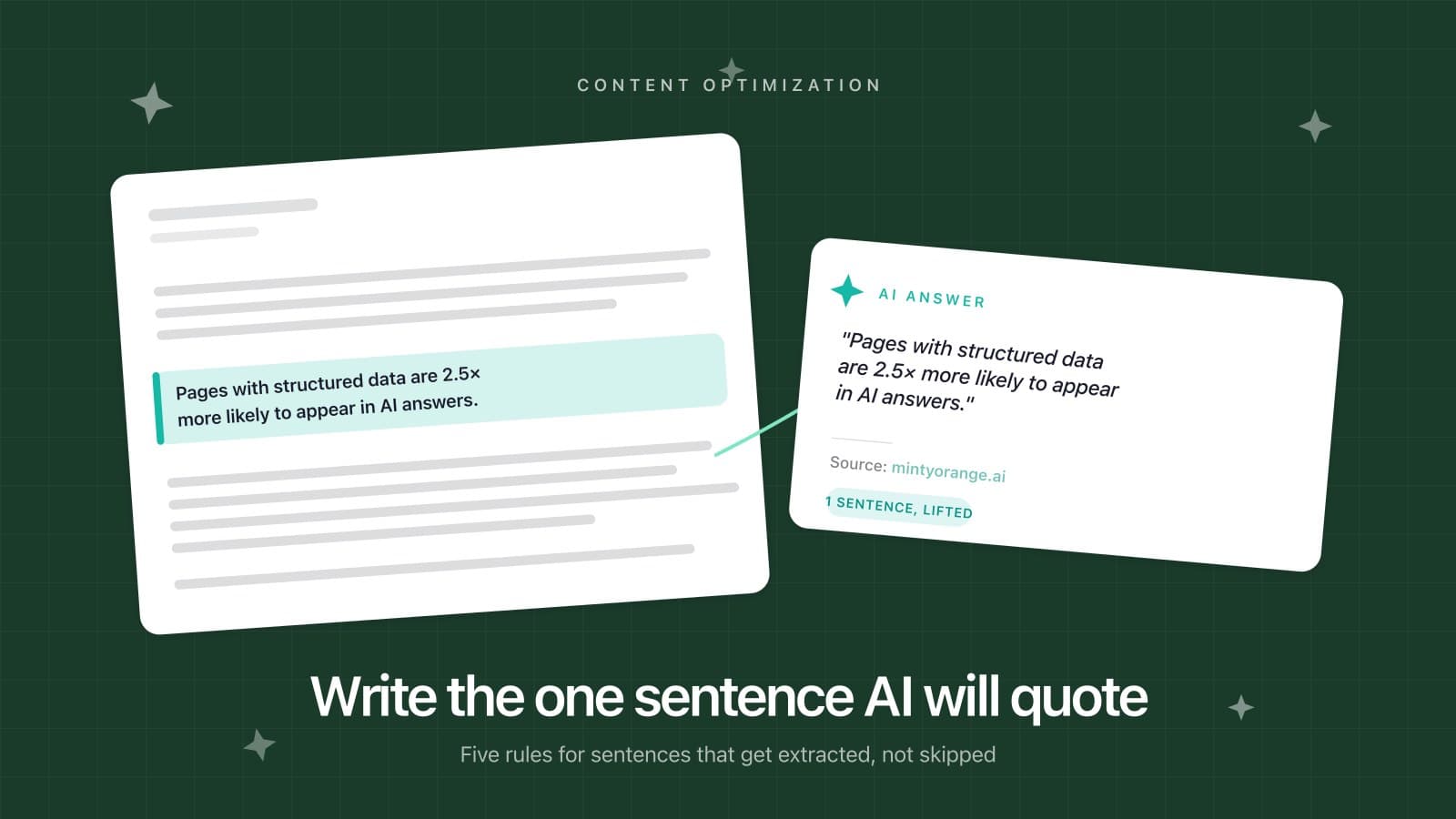
How to Write a Single Sentence That AI Will Quote
AI search engines extract and cite individual sentences from your content. Most sentences get skipped. Here are 5 rules for writing sentences AI will quote, with before-and-after examples for each one.
Lulu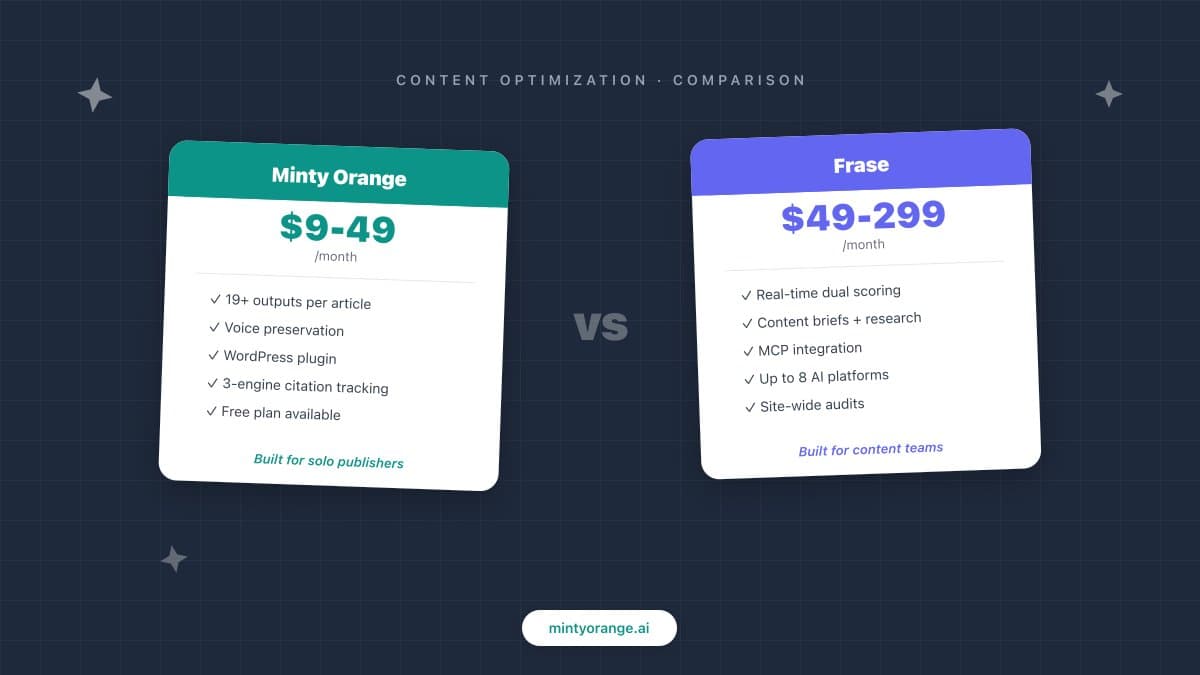
Minty Orange vs Frase: Which One Fits Your Website Better?
Minty Orange and Frase both combine SEO and GEO optimization. But they are built for different users. Here is a fair comparison of features, pricing, and who each tool works best for in 2026.
Josh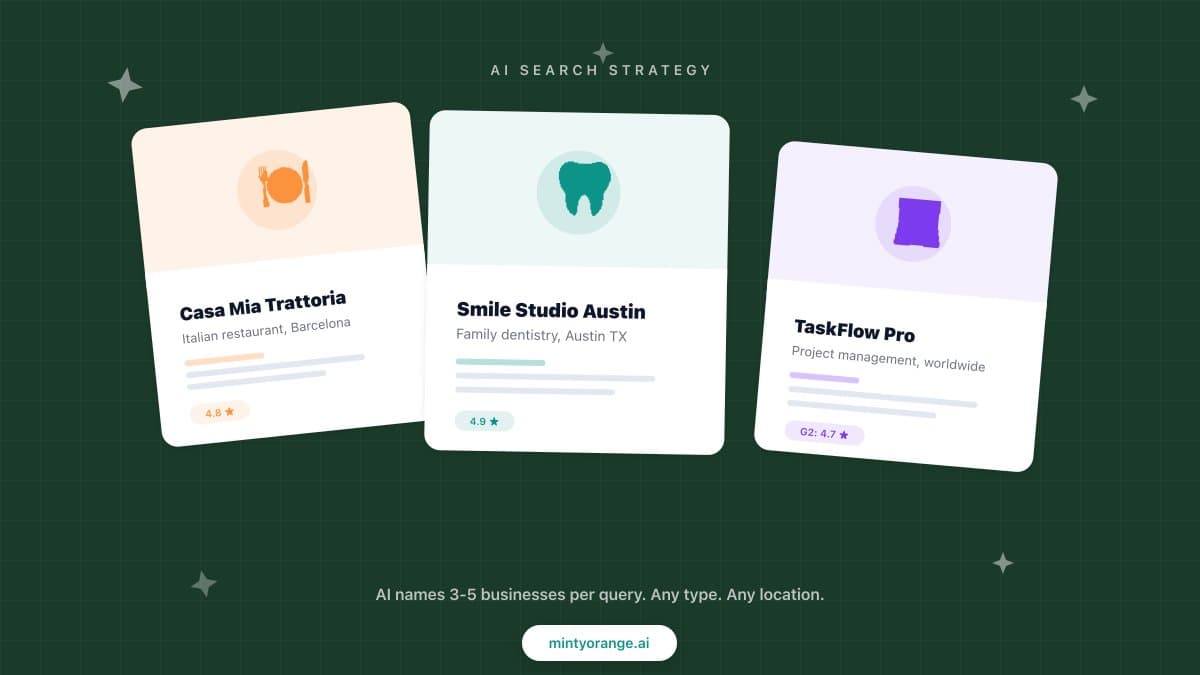
How to Get Your Business Found by AI Search (Whether You Run a Local Shop or Sell Worldwide)
When someone asks ChatGPT for a plumber, a hotel, or a software tool, AI names 3-5 options. In a 190,000-search study, 83% of restaurants were missing from these answers. Here is how to become one of the ones that show up.
Josh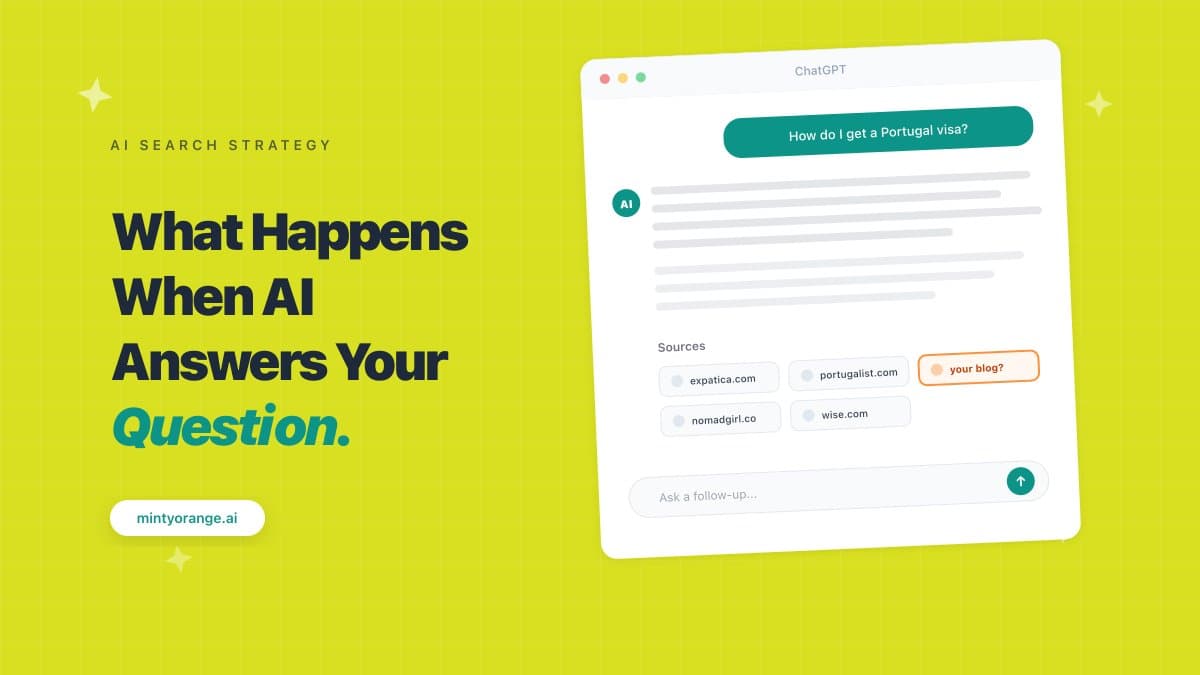
What Happens When Someone Asks ChatGPT About Your Topic
When someone asks ChatGPT a question you have written about, a chain of decisions starts. The AI searches the web, reads dozens of pages, picks which sources to cite, and generates an answer. Here is what that process looks like step by step, and where your blog fits in.
Lulu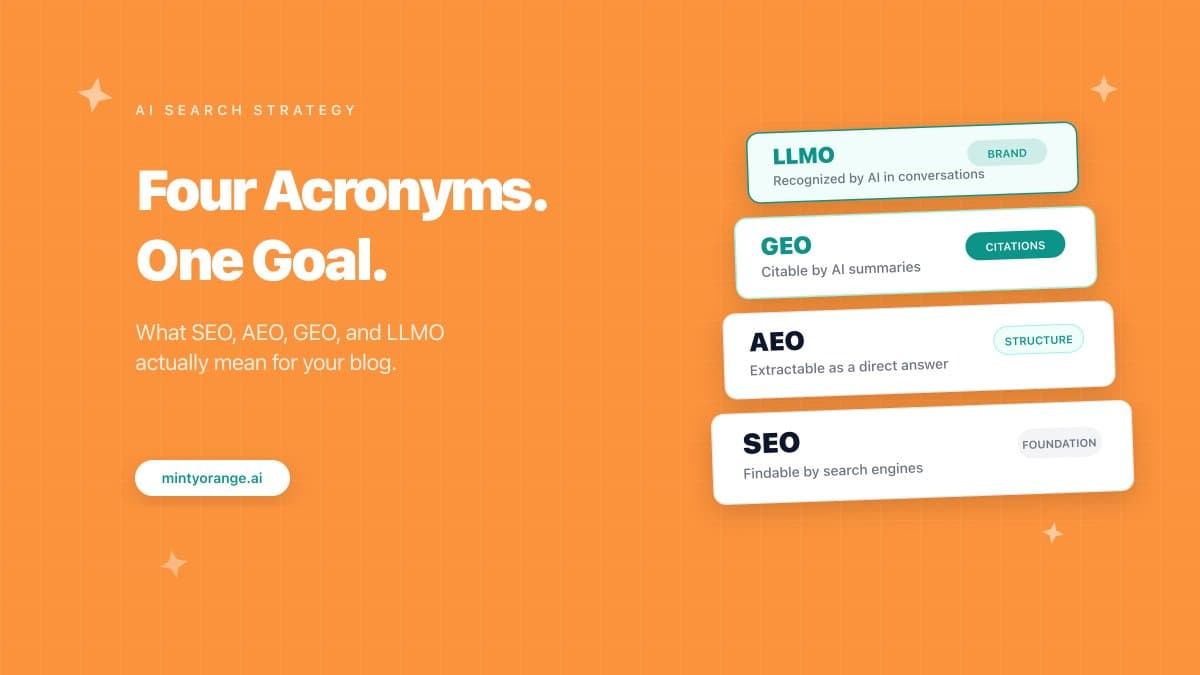
SEO, GEO, AEO, LLMO: What These Acronyms Mean and Whether You Need to Care
SEO, GEO, AEO, LLMO. Four acronyms, one goal: getting your content found. Here is what each one means in plain language, how they overlap, and what bloggers and publishers need to focus on in 2026.
Lulu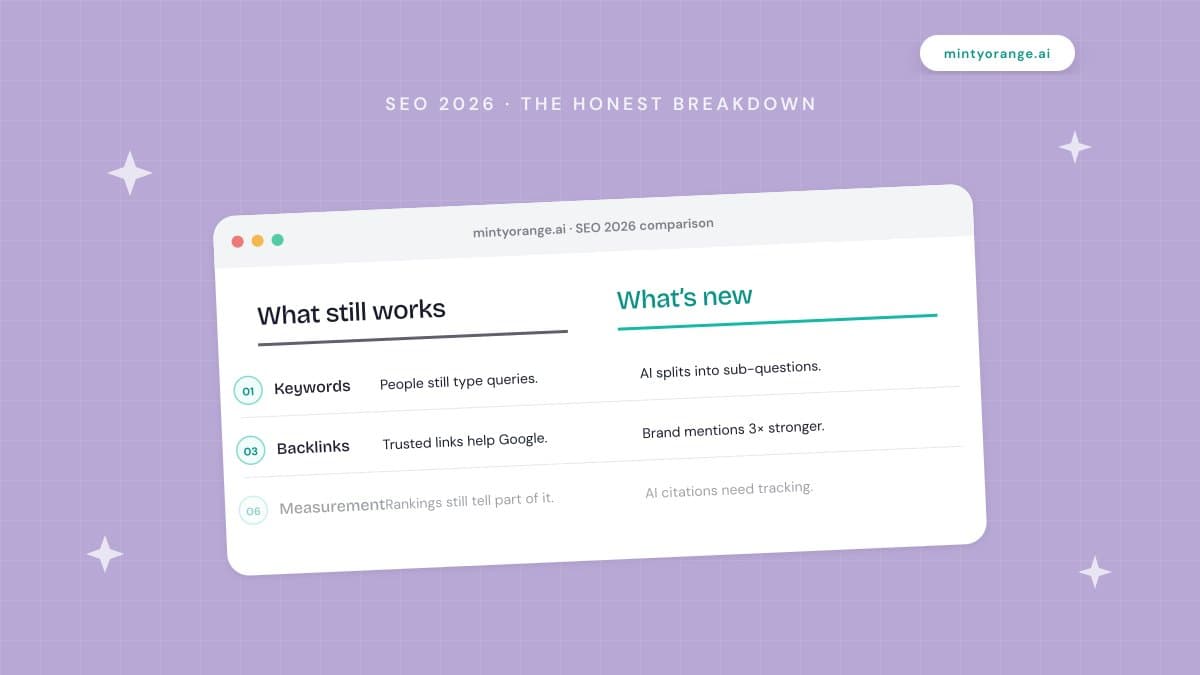
What Changed in SEO and What Didn’t: A Side-by-Side for 2026
SEO in 2026 is not a complete reset. Some fundamentals still hold, some rules changed, and some entirely new signals appeared. Here is a side-by-side breakdown of 10 areas every publisher needs to understand.
Josh
What “Information Gain” Actually Means and Why AI Rewards It
Google now measures how much new information your article adds compared to everything else already written on the topic. If your content says the same thing as everyone else, AI will skip it. Here is what Information Gain means in plain terms and how to make sure your content has it.
Josh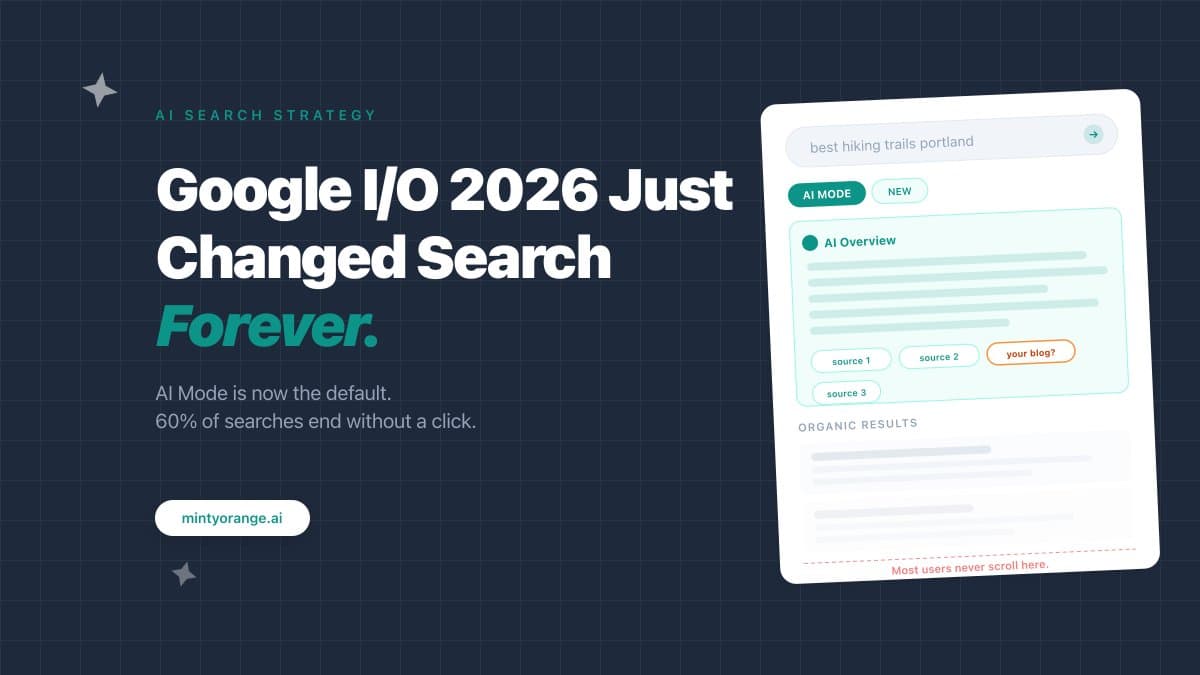
Google I/O 2026 Just Changed Search Forever. Here’s What Publishers Should Do Now.
Google announced the biggest change to Search in 25 years at I/O 2026. AI Mode is now the default, zero-click searches hit 60%, and publisher traffic is accelerating downward. The announcements, the data behind them, and the moves that still work for publishers.
Lulu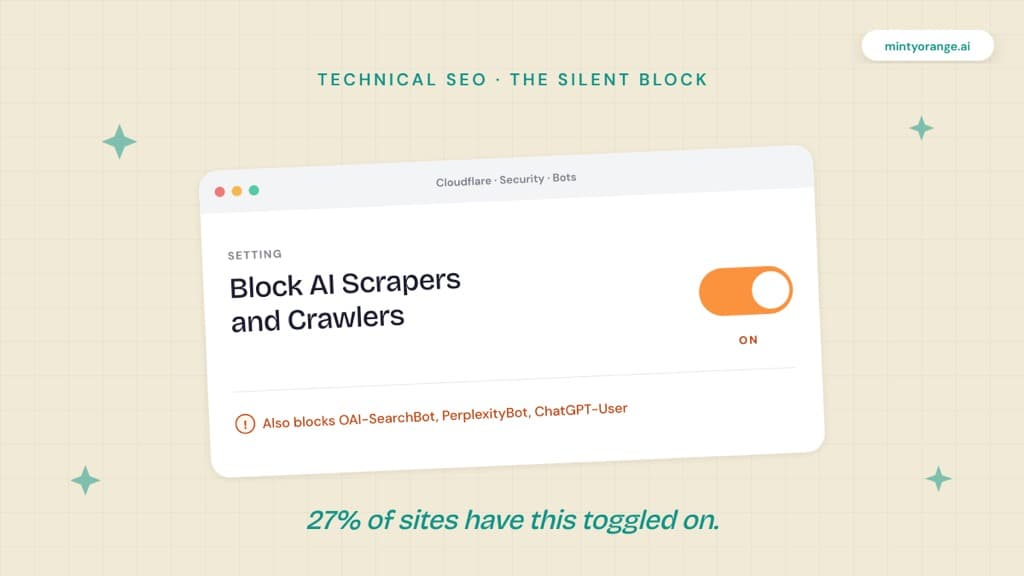
You’re Blocking AI Bots and You Probably Don’t Know It
In a Parse audit of 3,000 sites, 27% blocked at least one major AI crawler, usually without knowing it: Cloudflare settings, WordPress plugins, robots.txt rules. Check if you are one of them, see what each bot actually does, and fix it in five minutes.
Josh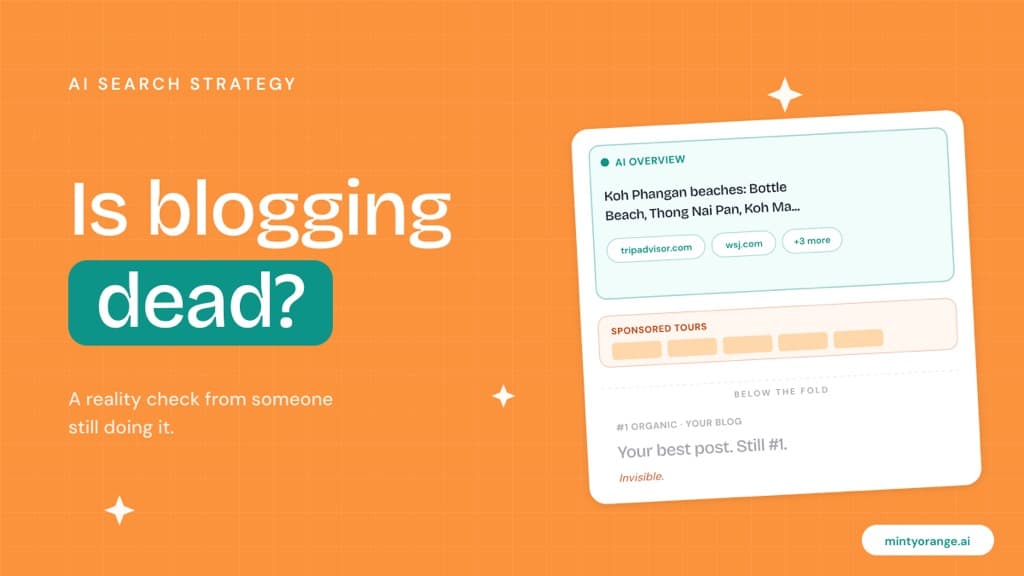
Is Blogging Dead? A Reality Check From Someone Still Doing It
Blogging isn’t dead. Click-based blogging is. Your rankings held and your traffic dropped anyway. This is why, and what still works for publishers who adapt instead of quitting.
Lulu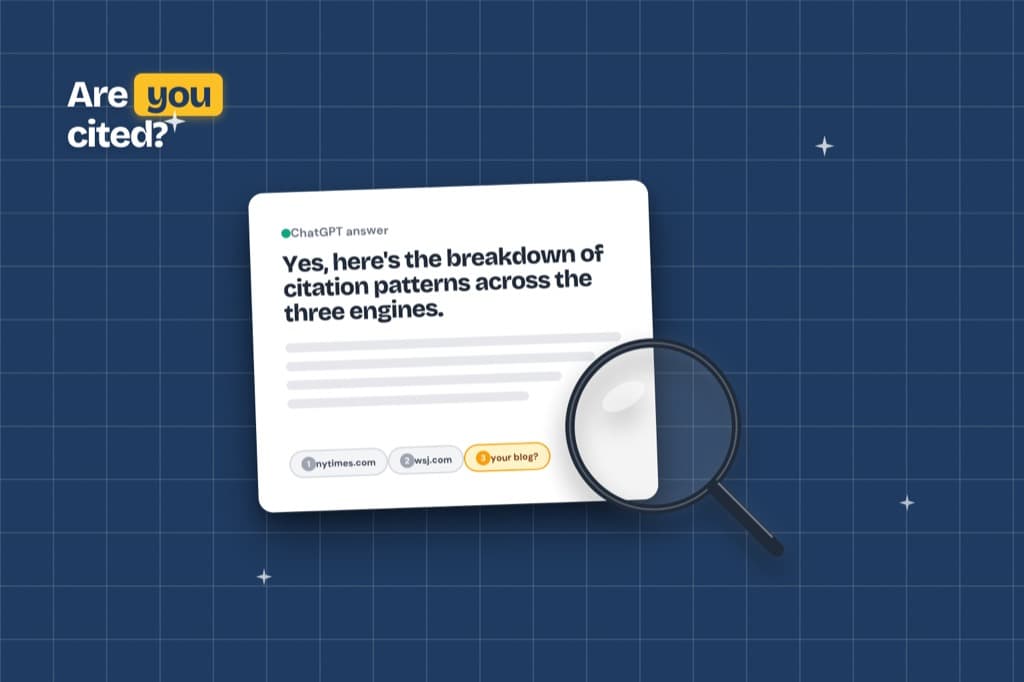
How to Check If You’re Cited by ChatGPT (And the Other AI Engines)
AI engines don’t show up in Google Analytics. So how do you know if ChatGPT, Perplexity, and Google AI Overviews cite your content? The manual methods, the server-log approach, and the limits of each.
Josh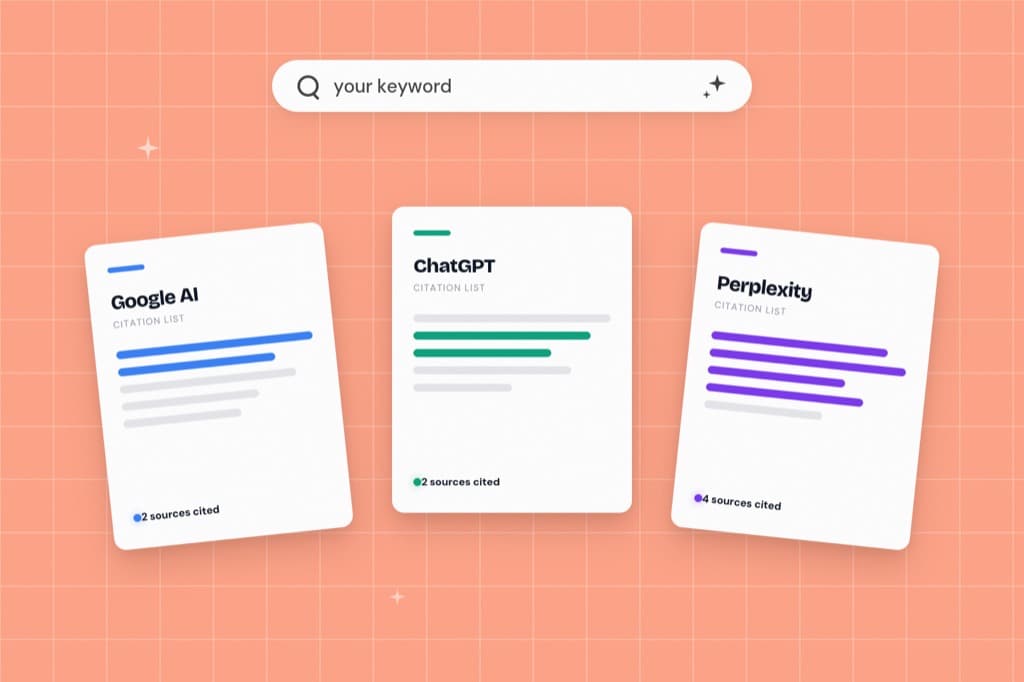
Why You Get Cited by Perplexity But Not ChatGPT (And Vice Versa)
Most publishers treat “AI search” as one thing. It’s three. And the rules are different enough that what wins on one engine can be invisible on another. What Perplexity, ChatGPT, and Google AI Overviews each actually want.
Lulu
How to Get Your Articles Cited by AI: The Off-Site Playbook for ChatGPT, Perplexity & Google AI Overviews
AI search engines decide what to cite based on both on-page structure and off-site signals. Here’s the playbook for building the off-site half: community presence, citations, and ecosystem visibility that AI uses to choose sources.
Lulu
Why AI Citations Are The New Rankings: How To Track Them
AI citations predict traffic, authority, and visibility in 2026. Here is how one SaaS company grew AI Overview impressions 11x in six months.
Josh
The 5-Article Strategy: Why One Topic Cluster Beats 20 Random Optimizations
Why one topic cluster beats 20 random optimizations in AI search. The 5-article strategy that made Perplexity cite my blog in 6 weeks. Data + steps.
Lulu
What Is Google AI Overview? And How To Stay Visible Anyway
Google AI Overview is changing how search works. Learn what it is, how it selects sources, and how to optimize your content to get featured.
Josh
The 8-Step Guide to Getting Your Articles Cited by AI
A practical, step-by-step guide to structuring your articles so AI systems like ChatGPT, Perplexity, and Google AI Overview cite your content.
Josh
How To Outrank LLMs When AI Writes Half The Internet
Human content outranks AI-generated content by doing the three things language models cannot: proving first-hand experience, providing original data, and […]
Lulu
What Is E-E-A-T And Why Should Every Blogger Care?
What is E-E-A-T? E-E-A-T stands for Experience, Expertise, Authoritativeness, and Trustworthiness. It’s Google’s framework for deciding whether your content deserves to rank.
Lulu