Do You Have to Label AI-Assisted Blog Posts?
If you use AI to help with an article, read what comes back, rework it in your own words, and publish it under your own name, the EU AI Act does not require you to add a label. The rule that covers text applies only to content published to inform the public on matters of public interest, and even there the obligation falls away when a human has reviewed the content and a person holds editorial responsibility for it. The parts of the law that made the headlines are aimed at the companies building the AI models and at deepfakes.
A journalist colleague emailed me with a headline and a very reasonable panic. AI labels are becoming compulsory in the EU, the piece said, and they wanted to know whether every post they had optimized now needed an AI stamp on it. They had already started adding a line saying the post was AI-assisted and human edited, just to be safe. Here is what is important for you to know if you are in the same spot.
One thing up front: this is careful research, not legal advice. I am a journalist and a blogger, not a lawyer. So I quote the law directly rather than paraphrasing it, and I link the full text at the end so you can check every sentence yourself.
What Actually Changed on August 2, 2026?
The transparency duties in Article 50 of the EU AI Act started to apply on August 2, 2026. That is the whole news event. The AI Act itself has been phasing in since August 2024, so nothing suddenly came into force that day. One specific chapter, the one about telling people when they are looking at AI output, became applicable, which is why the coverage clustered at the end of July.
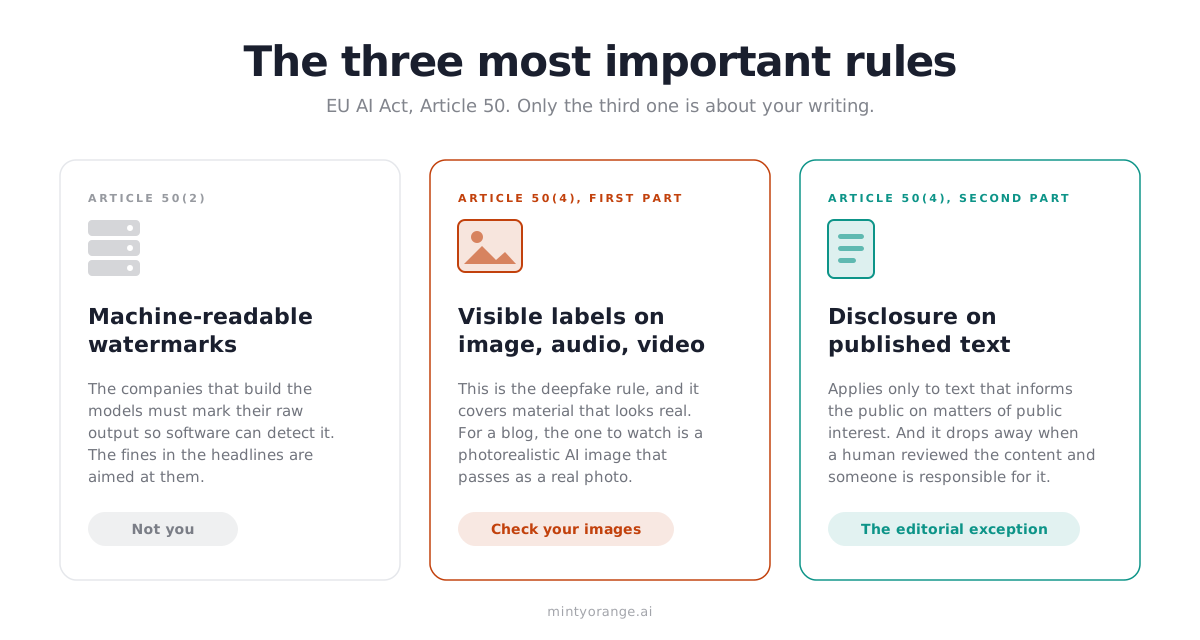
Behind that single headline sit three separate duties with three different addressees. Nearly all the confusion I have seen, including my own first reaction, comes from reading them as one rule that applies to everybody.
Who Has to Add the Watermarks?
The AI companies do, not you. The first duty lands on the providers of AI systems, which means OpenAI, Google, Anthropic and everyone else who builds and ships a model:
Providers of AI systems, including general-purpose AI systems, generating synthetic audio, image, video or text content, shall ensure that the outputs of the AI system are marked in a machine-readable format and detectable as artificially generated or manipulated.
Machine-readable means invisible to you and detectable by software. It is a watermark in the file or the token stream, not a line of text on your page. The same paragraph also carves out systems that merely perform an assistive editing function or do not substantially change the input, which is a provider-side question rather than a publisher-side one.
This is also where the frightening numbers in the coverage come from. Penalties running into millions of euros or a percentage of global turnover are written for companies of that size. They are not a threat aimed at someone running a food blog.
Which AI Content Needs a Visible Label?
Deepfakes do, and the law means that in the media sense: image, audio, or video that looks like real people, objects, places, or events. This is the duty that falls on the person publishing, and it is written plainly:
Deployers of an AI system that generates or manipulates image, audio or video content constituting a deep fake, shall disclose that the content has been artificially generated or manipulated.
Deployer is the law's word for the person using an AI system, as opposed to the company that built it. So this one is genuinely about you, if you publish that kind of material. The purpose behind it is the obvious one: fabricated audio of a politician, manipulated video before an election, a face put somewhere it never was.
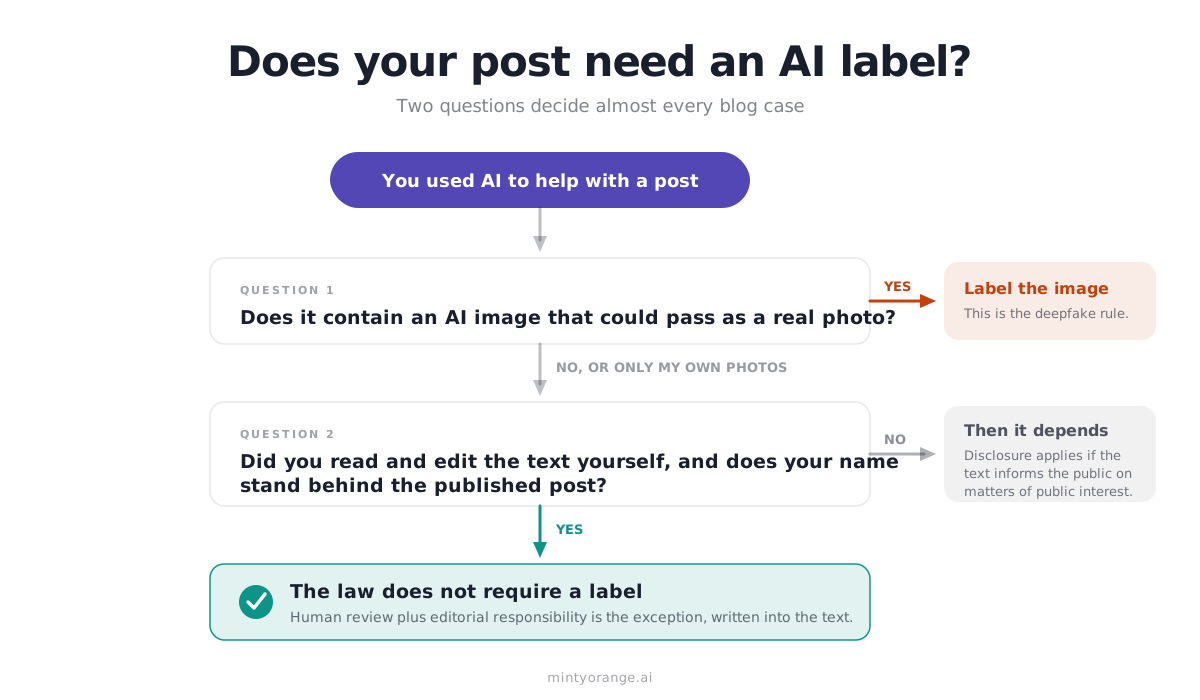
And this is the one real trap for a travel or food blog: a photorealistic AI image that a reader would take for a real photo.
An AI-generated sunset over a place you are writing about, dropped into the post without a word, is exactly the case the rule describes. Industry groups have criticized the EU guidance from July 2026 for reading the deepfake definition broadly, which cuts in the cautious direction rather than the relaxed one. Clearly artistic or satirical work only needs a more discreet disclosure. If your photos are your own, none of this touches you, and that is the position most bloggers I know are in.
Does AI-Assisted Text Need a Disclosure?
Only in a narrow case, and the exception is written into the same sentence. This is the paragraph the whole panic rests on, so it is worth reading slowly:
Deployers of an AI system that generates or manipulates text which is published with the purpose of informing the public on matters of public interest shall disclose that the text has been artificially generated or manipulated. This obligation shall not apply where the use is authorised by law to detect, prevent, investigate or prosecute criminal offences or where the AI-generated content has undergone a process of human review or editorial control and where a natural or legal person holds editorial responsibility for the publication of the content.
There are two gates in there, and your text has to pass through both before any label is owed. The first is purpose: the text has to be published to inform the public on matters of public interest. That language points at news, politics, elections, public health. Whether a hotel review or a hiking guide counts is already a stretch.
The second gate is the one that matters most, because it holds even if you decide your topic is a matter of public interest. The duty does not apply where the content has undergone human review or editorial control and where a person holds editorial responsibility for publishing it. Read that against your own workflow. You read the draft. You rewrote the parts that did not sound like you. Your name sits on the byline. That is human review, and you are the person responsible.
The Guardian piece that set off most of the worry actually contains the same reassurance, in a single line most readers slid straight past. Text needs a label, it says, "if there is no human editorial oversight". That clause is the whole story, and it went missing on the way to the headline.
Does This Apply if You Are Not in the EU?
Possibly, so do not file this under someone else's problem. The AI Act can reach beyond the EU when the output is used inside the EU, and almost every blog has European readers. The honest summary is that the primary target is the EU market, while the edges are wider than the map suggests.
Which is another reason to lean on the editorial exception rather than on geography. Reviewing your drafts and standing behind your work is an argument that holds wherever your readers happen to sit, and it does not depend on how a regulator reads a jurisdiction clause.
Do Old Posts Need AI Labels Retroactively?
No. Labeling content published before the rules is encouraged, but it is explicitly not mandatory. Nobody has to go back and stamp years of archive, which was the first fear I heard from people with a decade of posts behind them. Personal content shared by private individuals sits outside these duties as well.
Should You Add a Voluntary Label Anyway?
That is a real choice, and there is nothing wrong with making it. A line saying a post was AI-assisted and human edited is a small courtesy to readers who care how their information is made, and some audiences appreciate that a lot. The EU even publishes ready-made labels. Just make the decision because you want the transparency, not because you think a regulator is coming for you.
This is also why Minty Orange never inserts a disclosure line into your article on its own, and never will. It came up while I was writing that reply, and the reasoning is simple enough to state in two sentences:
The moment an author reworks a section in their own words, that line would not be true anymore. Whether to add one should be the author's call, not my software's.
The law puts the decision in the hands of the person with editorial responsibility. Software quietly stamping your article would take that decision away from you, and would often be inaccurate the moment you started editing. The tool is built around the human editor for the same reason: your original stays intact, changes are small and specific, and new sections arrive as drafts in your voice for you to check rather than finished text to paste unread.
Where This Does Not Protect You
If you paste a draft in without reading it and publish it unchanged, you are in a different position, and I am not going to pretend otherwise. There is no human review in that workflow and nothing meaningful for a person to take responsibility for. The exception is not a property of the tool you used, it is a description of what you did.
That distinction is worth holding onto, because it is also the difference between a post worth reading and one that is not. You earn the exception the same way you earn a reader: by actually doing the work.
Does Google Penalize AI-Assisted Content?
Search engines do not penalize a method, they act against mass-produced, unedited content with nothing to offer, the thing Google calls scaled content abuse. A researched post in your own voice, with your own experience in it, is the opposite of the pattern that gets hit.
I will not promise you immunity, because nobody can, and anyone selling that certainty is selling something. But the risk people are really worried about here is not the machine that helped with a heading. It is publishing at volume without care, and that was a bad idea before any of these rules existed.
Questions
Frequently Asked.
In most blogging cases, no. The EU AI Act only requires disclosure for text published to inform the public on matters of public interest, and even then the obligation does not apply when the content has undergone human review or editorial control and a person holds editorial responsibility for publishing it. If you edit your drafts and publish under your own name, that exception describes you.
It can. The regulation reaches providers and deployers outside the EU when the output is used within the EU, and most blogs have European readers. Rather than relying on where you are based, rely on the editorial exception: human review plus a named person responsible for publication is an argument that works regardless of location.
No. Labeling content published before the rules took effect is recommended but explicitly not mandatory. You do not have to go back through years of archive and add disclosures.
Yes, if they are photorealistic and could pass as real. The deepfake rule covers image, audio, and video that depicts real-looking people, objects, places, or events, and it applies to the person publishing. Clearly artistic or satirical work needs only a more discreet disclosure. Your own photographs are not affected.
The providers of the AI systems. Companies like OpenAI, Google, and Anthropic must mark their output in a machine-readable format so software can detect it. That duty, and the large penalties reported in the press, sit with them and not with the people writing articles.
No, and that is deliberate. Once you rework a section in your own words, an automatic line would no longer be accurate, and the law puts the decision with the person who holds editorial responsibility. Whether to add a voluntary label is your call to make.
If you want to read the law yourself, the full regulation is on EUR-Lex, and there is a much friendlier version of just Article 50 if you would rather not scroll through the whole thing. And if you are wondering which other AI-search rules people are repeating without checking, we went through the 2026 advice one claim at a time in what is proven and what is folklore.