Should Key Takeaways Go at the Top or the Bottom?
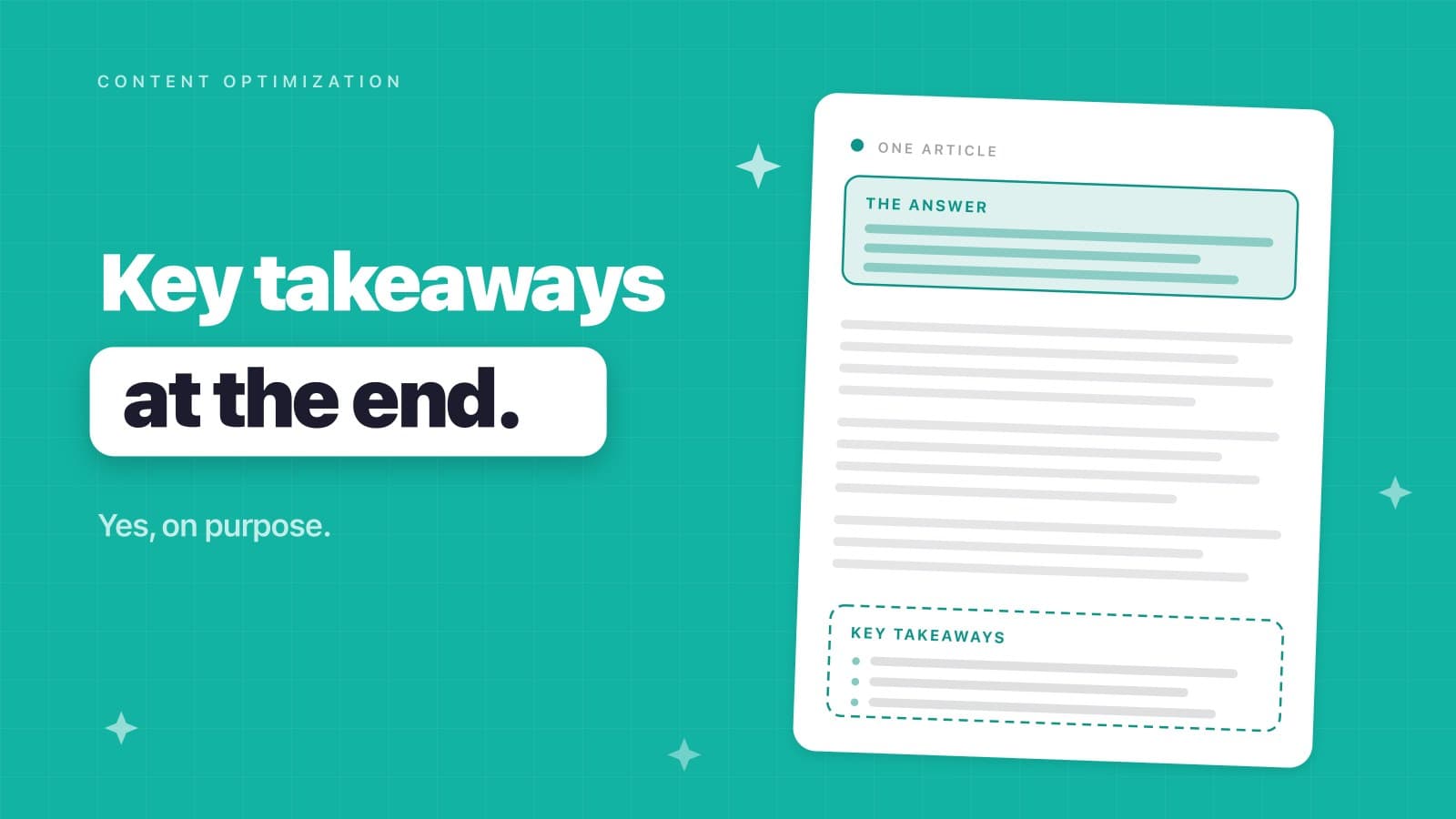
We put ours at the bottom, deliberately. One direct answer goes at the very top of the article, where readers and AI engines both look first. The takeaway bullets at the end recap what the article already said, which means they carry nothing that does not already exist higher up in a stronger form. Putting them last costs nothing in extraction terms and leaves the reader a reason to keep going.
The Case for Putting It at the Top
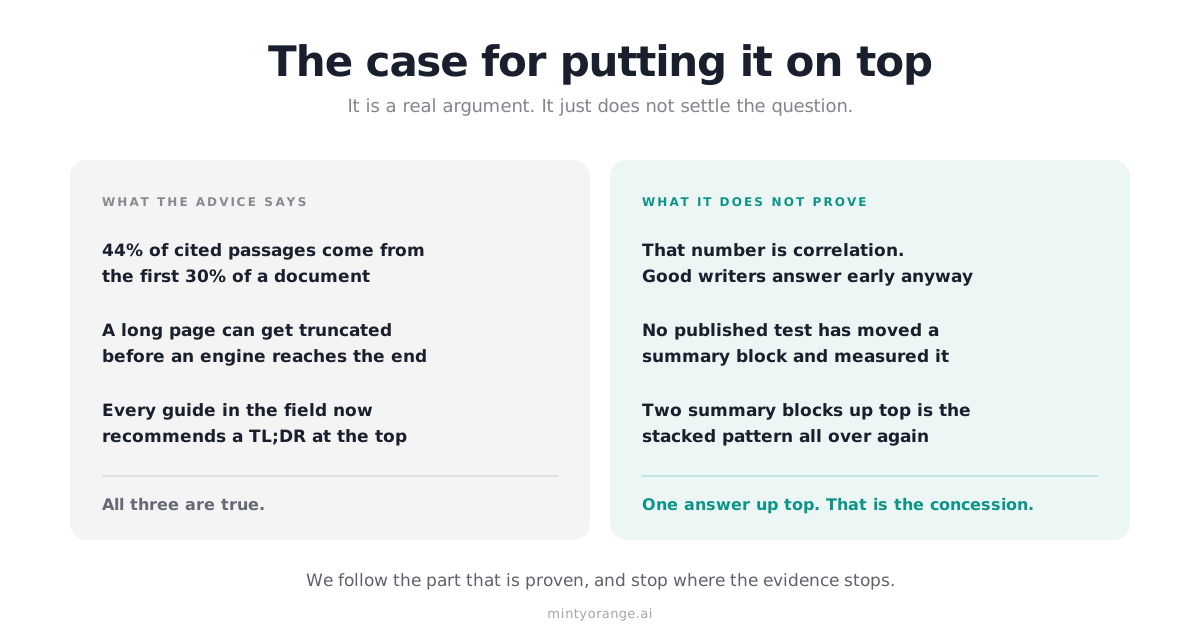
The strongest version goes like this. Kevin Indig analyzed 1.2 million ChatGPT answers with 18,012 verified citations and found that 44.2% of cited passages come from the first 30% of a document. If AI engines quote the top of pages that much more often, put your most quotable material there. That is a coherent argument built on a real number.
There is a second argument, about truncation. When an engine fetches a long page live, it does not always process the whole thing. Anything sitting at the very bottom is the first thing at risk of never being read. If your summary lives down there, you may be handing the engine an article whose conclusion it never sees.
And there is a third, quieter argument: everybody else is doing it. That is worth more than people admit. When an entire field converges on a practice, the burden is genuinely on the one arguing against it, and that is the position I am in here.
Why That Does Not Settle It
The 44 percent is correlation, not a placement test. It tells you where cited passages happened to sit, in articles nobody rearranged for the study. Good writers put their answers early. Introductions carry the thesis. So the top of a document is where the most quotable sentences already live, before anyone optimizes anything.
What would settle it is a different study: take the same articles, move a summary block from the bottom to the top, hold everything else constant, and measure what changes. I have not found one. Every guide I have read that recommends a TL;DR at the top cites the same correlation, which means the field is repeating one number rather than accumulating evidence.
That does not make the advice wrong. It makes it unproven, and unproven advice does not get to override a reason to do something else.
The Takeaways Are a Copy, and Always the Weaker One
Here is the part that decided it for me. Key takeaways are recapitulation by construction. Every bullet in that block is a compressed version of something the article already said at greater length, with the evidence attached.
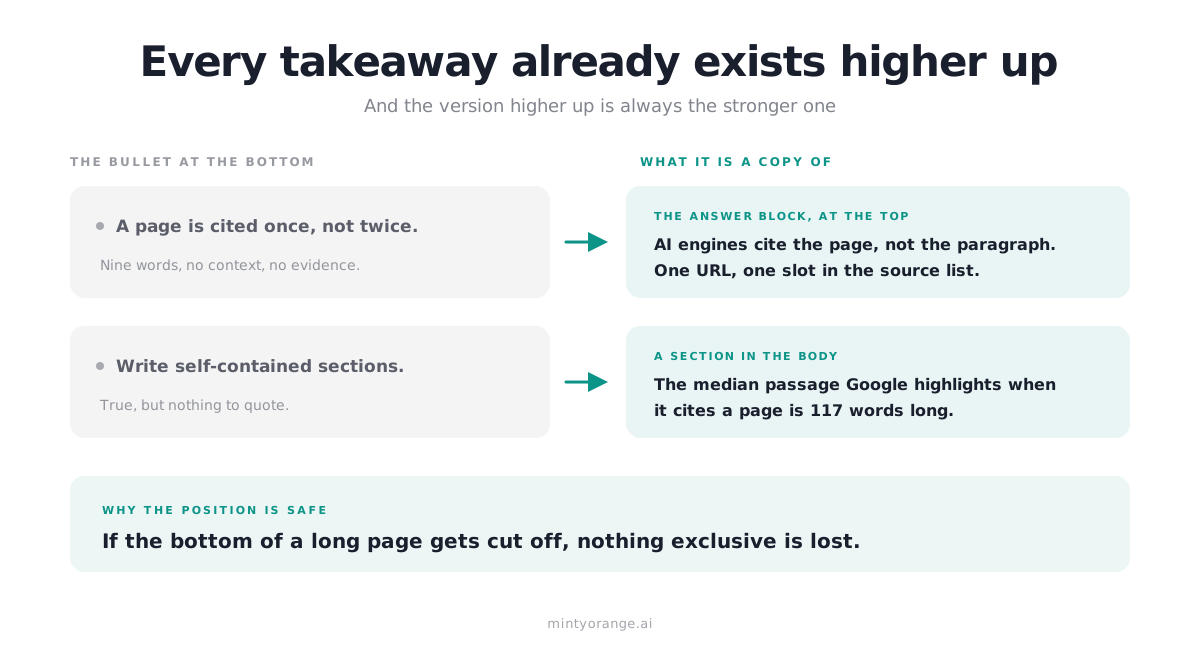
Look at what an engine has to choose between. On one side, a nine-word bullet with no context and no source. On the other, the same claim stated in full, in the section where the evidence for it sits. The second one wins every time, and it should.
Which turns the truncation worry inside out. Yes, the bottom of a long page is the part most likely to get cut. But if the only thing down there is a weaker duplicate of material that appears earlier, losing it costs nothing. The risk everyone warns about only bites if you put something exclusive at the end, and takeaways are the opposite of exclusive.
Two Blocks at the Top Is the Pattern We Argue Against
There is also a consistency problem. We wrote a whole article about why stacking a lead summary and a key-facts box at the top of a page does not earn you a second citation. A page is cited once. Two summary blocks are two candidates for the same seat, not two tickets.
If I keep one answer-first block at the top, which I do, and then move the takeaways up there as well, I have built exactly the stacked pattern I spend articles arguing against. I would rather be consistent than fashionable.
Scroll Depth Is Revenue
The argument I almost never see in these discussions is the publisher one, which is strange, because for most people reading this it is the whole business.
If you monetize with display ads, your income tracks how far people scroll. If you monetize with affiliate links, those links live inside the article, not above it. A complete five-bullet summary at the top of the page tells a reader everything they came for before they have passed a single ad slot or a single link. You have answered them perfectly and removed every reason to continue.
One direct answer at the top is a fair trade: it serves the reader who wants the short version, it is the passage most likely to be extracted, and it still leaves the specifics, the evidence, and the story further down. A full recap at the top is a different deal entirely, and it is one that costs the publisher real money for an unproven gain.
What We Actually Do
So the layout is deliberate rather than lazy. One question-and-answer block sits directly under the headline, before the introduction, because that is the spot engines read first. In the product we describe it plainly: your answer-first opening stays the primary AI-extraction point. Everything after that is the article doing its job, in sections written to stand on their own.
Then the takeaways sit at the end, where a recap belongs. They are a courtesy to the person who read the whole thing and wants to hold onto it, the same way a good conclusion has always worked in print.
Where This Falls Apart
Two honest limits, because a position you cannot puncture is usually a position you have not tested.
- ✓It only holds while the takeaways carry nothing exclusive. The moment you put a number, a recommendation, or a conclusion in that block and nowhere else, it stops being a recap and becomes the only copy of something. Then the bottom of the page is a genuinely bad place for it, and either move it up or repeat it in the body.
- ✓They only reach the people who read to the end. That is a minority of any article's audience, and I am not going to pretend otherwise. Takeaways at the bottom are a service to the readers who stayed, not a way to reach more people. If someone sells you an end-of-article summary as a visibility feature, they are overselling it.
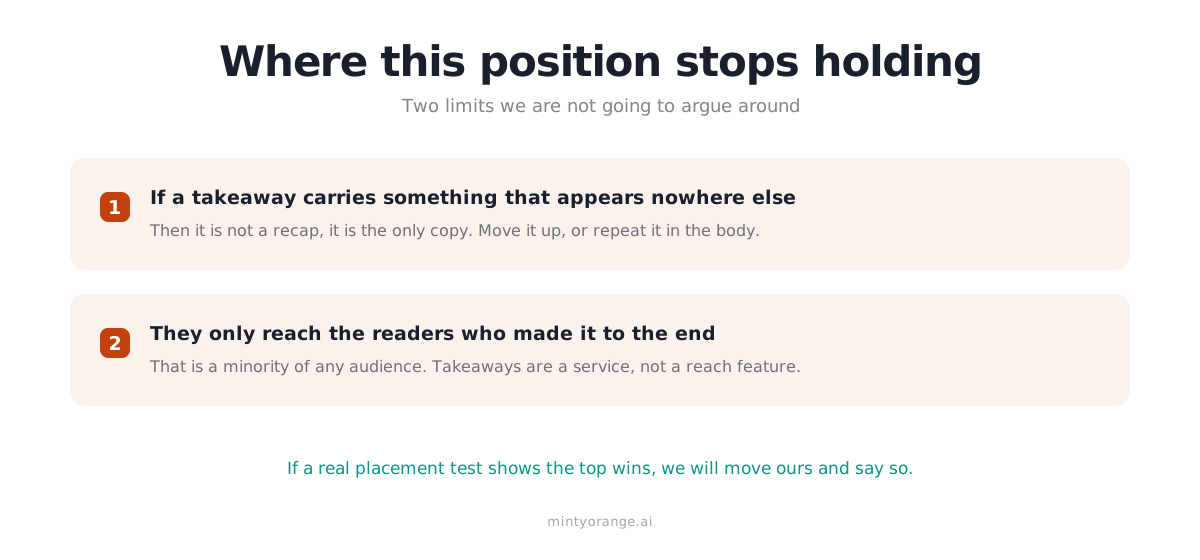
And if a real placement experiment gets published tomorrow showing that a summary block at the top lifts citations on its own, I will move ours and write about why I was wrong. That is the deal. The position is based on the evidence available, not on the layout being mine.
Questions
Frequently Asked.
Either can work, but there is no published experiment showing that moving a summary block to the top lifts AI citations on its own. We keep one direct answer at the top, where engines read first, and put the takeaway bullets at the end, because those bullets restate material that already appears higher up in a stronger form.
The evidence usually offered for this is a correlation: about 44% of cited passages come from the first 30% of a document. That reflects where quotable material already sits, since writers put answers early. It is not a test of moving a summary block, so it does not prove the tactic.
It is a real risk, and it is the strongest argument for the top. It matters when the bottom of your page carries something exclusive. A takeaway block that only recaps earlier material is not exclusive, so losing it to truncation costs nothing.
Yes, and that is the one concession worth making. A single direct answer near the top serves readers and is the passage most likely to be extracted. The problem starts with the second block that repeats it, which competes with the first instead of adding anything.
Because scroll depth is income. Display ad revenue depends on how far people read, and affiliate links live inside the article. A complete summary at the top answers the reader before they reach any of it, which is a real cost in exchange for a benefit nobody has demonstrated.
If you want the wider version of this argument, we went through the whole 2026 checklist claim by claim in what is proven and what is folklore. And if you disagree with this one, I would genuinely like to hear it, especially if you have run the test I could not find.