Where Is the Generative AI Report in Google Search Console?
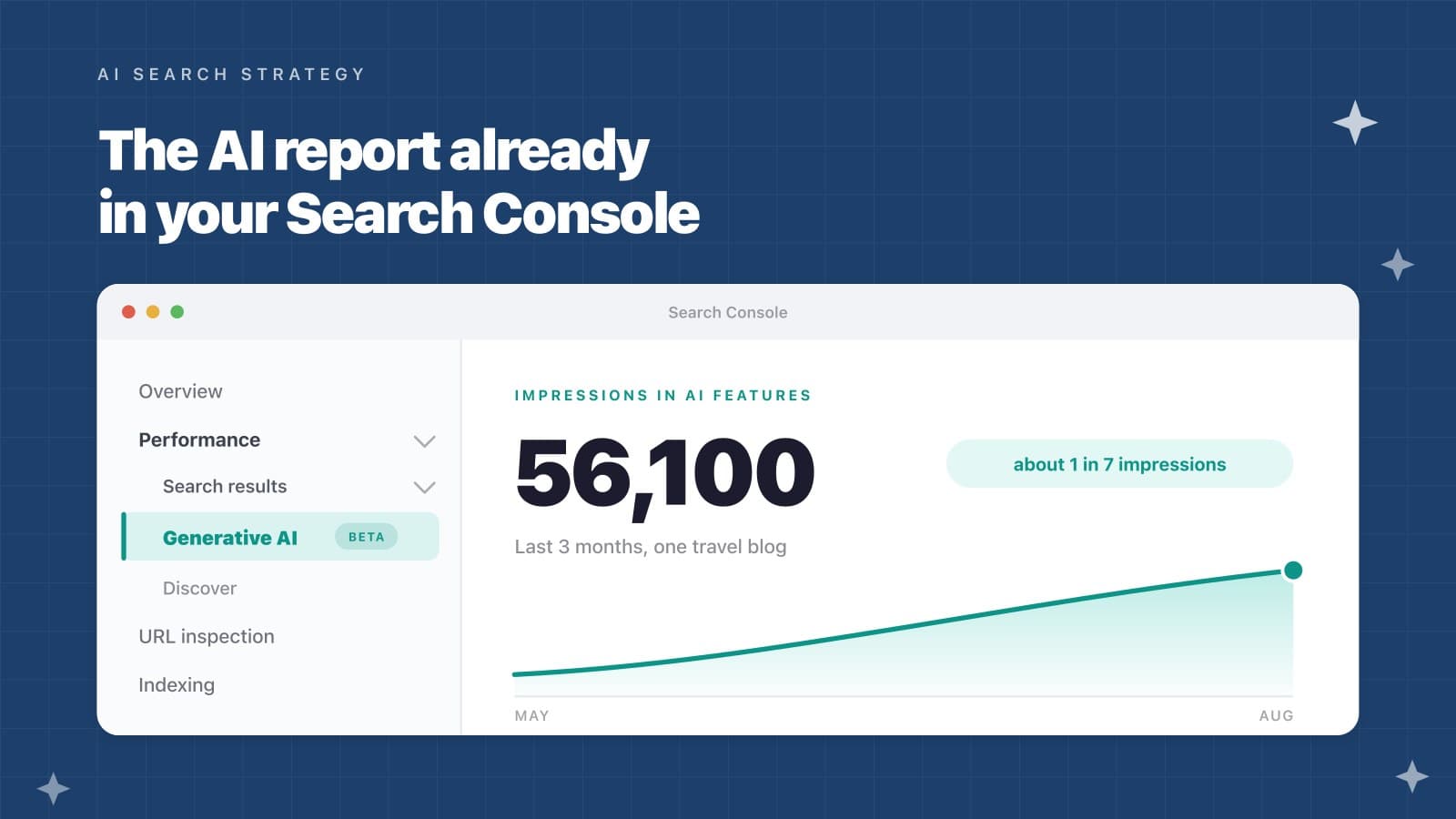
Open Search Console, click Performance in the left sidebar, then expand Search results, and you will find Generative AI sitting underneath it as a sub-item. It shows how many impressions your pages earned inside Google’s AI Overviews and AI Mode. The report is labeled Beta, the data starts on May 18, 2026, and it is free for every verified property.
I clicked on it for the first time on a Monday morning, mostly by accident, while I was looking for something else entirely.
The property was nomadmum.com, my travel blog, and the reason Minty Orange exists at all. And the number sitting at the top of the report was 56,100 impressions over three months. Fifty-six thousand times, one of my articles was part of what Google showed somebody inside an AI answer.
This is the first time Google officially tells site owners how often their pages show up in AI answers. Before this report, that was guesswork.
What the Report Actually Contains
The Generative AI report counts impressions in two surfaces: AI Overviews, the summary box that appears above the blue links, and AI Mode, Google's conversational search experience. If your page was one of the sources used to build that answer, you get an impression.
You can break the data down by page, country, device, and day, exactly like the normal performance report. So you can see which of your articles AI answers actually reach for, and whether the trend is going up or down.
One thing to know before you open it: the data starts on May 18, 2026, and there is no historical backfill. If you select a three month window today, you are looking at close to the entire history that exists. Nobody has years of this data. Everybody started at the same line.
My Numbers, and What They Say
I am sharing these because an abstract “AI visibility is real” claim is easy to nod along to and impossible to act on. A number from a normal blog run by one person is easier to compare yourself against.
| Metric | Value |
|---|---|
| Generative AI impressions, last 3 months | 56,100 |
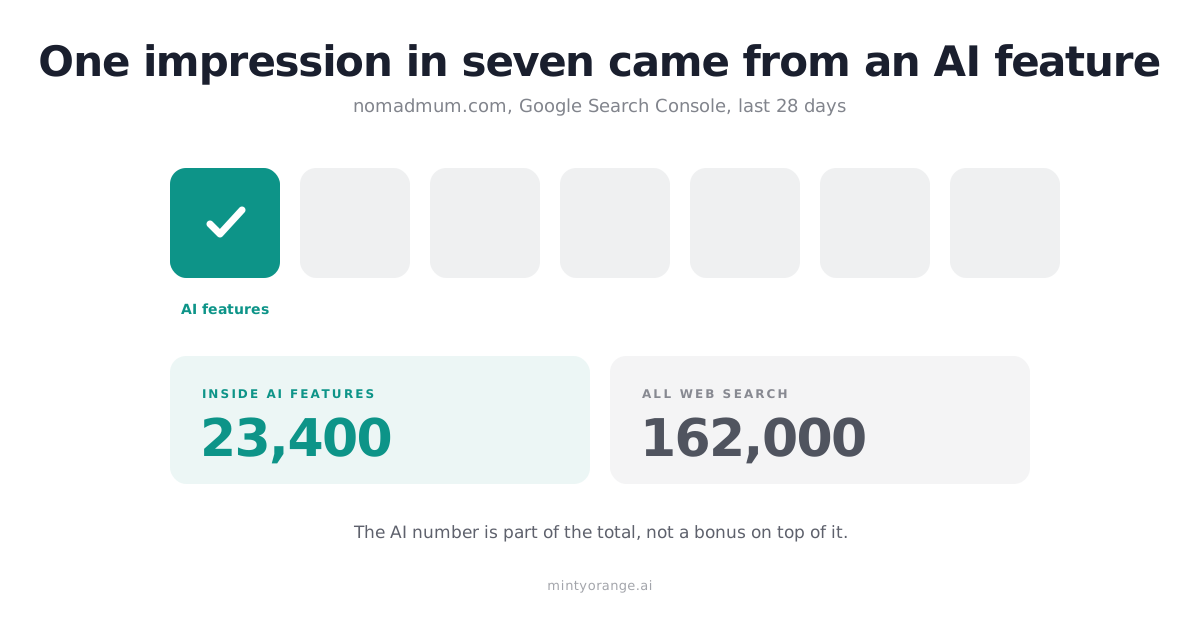
| Generative AI impressions, last 28 days | 23,400 (about 836 per day) |
| Trend across the 3 months | from about 450 per day in late May to 850 to 1,150 per day in August |
| All web search impressions, last 28 days | 162,000 |
| Share of impressions from AI features | about 14 percent |
Roughly one in every seven impressions my blog earned in Google over the last 28 days happened inside an AI feature.
And the direction matters more than the level. In late May the report showed around 450 impressions a day. In August the busiest days sit between 850 and 1,150. That is roughly a doubling in three months, on a blog where I did not suddenly publish twice as much.
Your number will look different. A site in a fast-moving news niche, a shop, a B2B blog, all of these get pulled into AI answers at different rates. The point is not my 14 percent. The point is that you can now see yours.
Which Articles End Up in AI Answers
The page-level breakdown is the part I found genuinely useful, because it shows a pattern rather than a total.
| Page | AI impressions, 3 months |
|---|---|
| /what-to-wear-in-thailand/ | 5,220 |
| /baby-headphones-for-the-plane/ | 5,086 |
| /koh-samui-with-kids/ | 3,380 |
| /best-airlines-to-fly-to-thailand/ | 3,304 |
| /capybara-cafe-koh-samui/ | 3,238 |
| /things-to-do-in-koh-samui/ | 3,197 |
| /samui-elephant-sanctuary-review/ | 1,546 |
| /best-souvenirs-from-thailand/ | 1,537 |
| /phaeng-waterfall-hike-in-koh-phangan/ | 1,537 |
Look at what those pages have in common. What to wear in a specific country. Which headphones survive a flight with a baby. Which airline. Which café. Which waterfall, on which island.
Every single one of them is a concrete question with a concrete answer, and every single one was written by somebody who actually went there and actually packed that bag. None of my broader posts, the “ultimate guide” type pieces that try to cover a whole destination, made the top of that list.
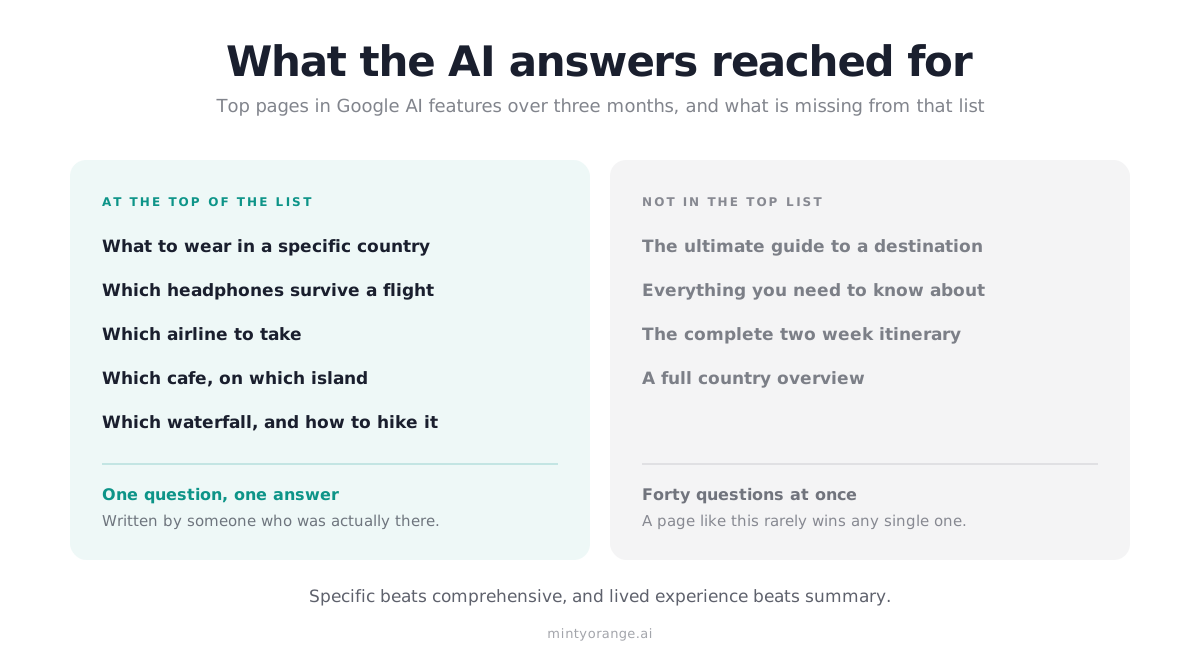
That matches what we saw when we tracked 95 articles for three months and what I would tell any blogger who asks where to start: specific beats comprehensive, and lived experience beats summary. AI answers are assembled from sources that resolve a question cleanly. A page that tries to answer forty questions rarely wins any of them.
What the Report Does Not Tell You
This is the part I want to be careful about, because it would be easy to read more into this report than it holds.
- ✓No clicks and no queries. You get impressions and nothing else. You cannot see what someone searched, and you cannot see whether they clicked through to you. Do not convert these numbers into traffic in your head.
- ✓These impressions are not extra. They are part of your normal web search impressions, not a bonus on top. My 23,400 AI impressions are a subset of the 162,000 total.
- ✓Google only, not the rest of AI search. ChatGPT, Perplexity, Claude, and Copilot are nowhere in this report. Google is reporting on Google.
- ✓Discover is separate. Generative AI data from Discover lives in its own report, so if you get meaningful Discover traffic, check both.
- ✓There are minimum thresholds. A page needs enough impressions in AI features to appear at all, so a small site may see a total without a useful page breakdown.
- ✓All timestamps are Pacific Time, and the most recent days are still preliminary and will move.
- ✓Not in the API. The Search Console API still knows only web, image, video, news and Discover as search types, so no tool, ours included, can pull these AI impressions for you. You read them in Search Console, and you write them down.
- ✓Next to the report sits an off switch. Since August 31, 2026 every site has a toggle in the same generative AI section that removes it from AI Overviews, AI Mode and AI Overviews in Discover without touching normal rankings. If your AI impressions read zero, check that nobody flipped it.
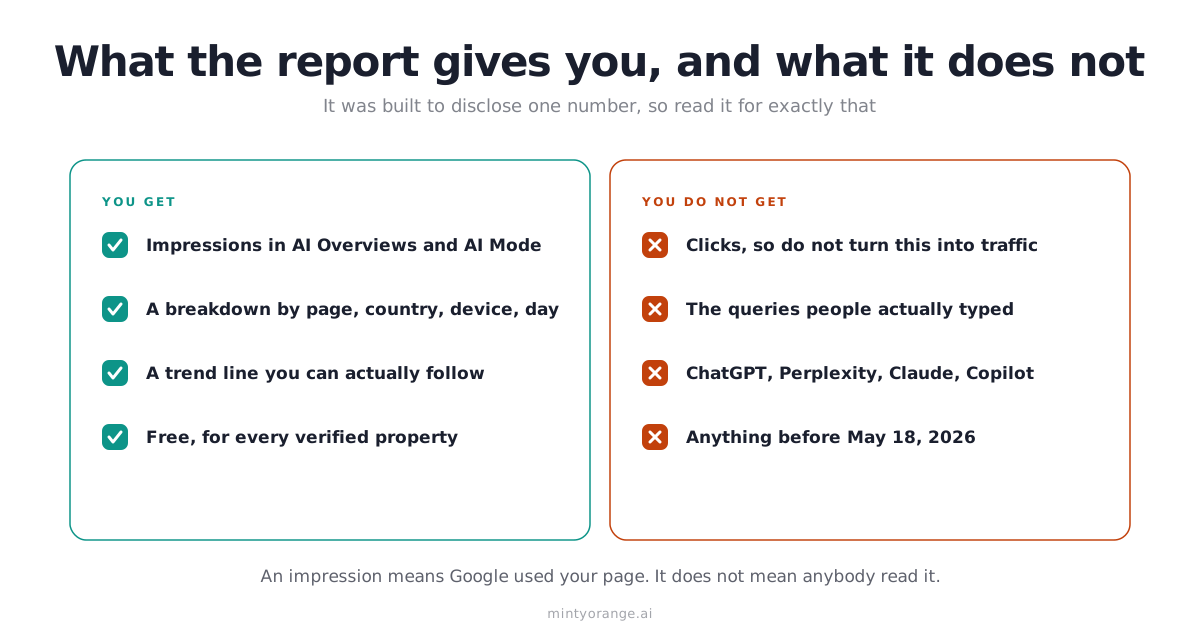
It is worth saying plainly: this report does not prove that anybody read your article. An impression means Google used your page as a source for an answer it showed to somebody. That is meaningful, it is the precondition for everything else, and it is not the same as a visitor. We wrote about the other ways to check whether ChatGPT and Perplexity mention you, and those still apply for everything that is not Google.
What to Do With Your Number
Open the report, set the range to three months, and write down three things: your total, your trend direction, and your top five pages.
The total tells you whether this channel is relevant for you yet. The trend tells you which way it is moving. The top pages tell you what kind of writing gets you picked, in your niche, in your voice, not in a case study about somebody else’s site.
Then compare that top-pages list against your traffic reports. In my case the overlap was partial and that was the interesting part: some of my best AI performers are not my biggest traffic pages, and a couple of my traffic heroes barely register in AI answers. Those two lists answer different questions, and until this report existed I only had one of them.
If the trend is up and you want more of it, the work is on the page: answer the question in the first two sentences, keep the structure clean, make the specific claims specific. That is the whole idea behind Minty Orange. It reads an article the way a search engine and an AI answer engine read it, then hands you the concrete edits, applied straight in the WordPress editor, or in the browser if you are not on WordPress. On-page work raises your odds of being picked. No tool can guarantee a citation, and anyone who tells you otherwise is selling you something.
For the first time, the scoreboard is free, official, and already in your account. Go look at yours.
Questions
Frequently Asked.
In the left sidebar, click Performance, then expand the “Search results” entry. “Generative AI” appears underneath it as a sub-item, not as its own top-level menu point. That is the main reason people miss it. The report is marked Beta.
Impressions of your pages inside Google AI Overviews and Google AI Mode. You can break the data down by page, country, device, and day. It does not include Search Labs experiments, and Discover data lives in a separate report.
No. The report contains impressions only, with no clicks and no query data. You cannot tell from this report how much traffic AI answers sent you, so do not estimate clicks from these numbers.
No. They are a subset of your regular web search impressions, not an addition. That is what makes a share calculation valid: divide your Generative AI impressions by your total web search impressions for the same period to see what proportion of your visibility happens inside AI features.
Data collection started on May 18, 2026, and there is no historical backfill. A three month window today covers almost the entire history available, so nobody has a longer track record than anybody else yet.
The rollout started on June 3, 2026 with a subset of UK-based site owners, following requirements from the UK Competition and Markets Authority, and has since expanded to essentially everyone without a formal completion announcement. If it is missing, check that you are looking under Performance and Search results rather than in the top-level menu. Pages also need to clear a minimum impression threshold to appear in the breakdown, so very small sites may see a total without much page detail.
No. It covers Google surfaces only. To check whether ChatGPT, Perplexity, or other engines cite you, you need to query those engines directly or use a citation tracking tool that runs scheduled queries against them.