Which GEO Tactics Are Actually Backed by Evidence in 2026?
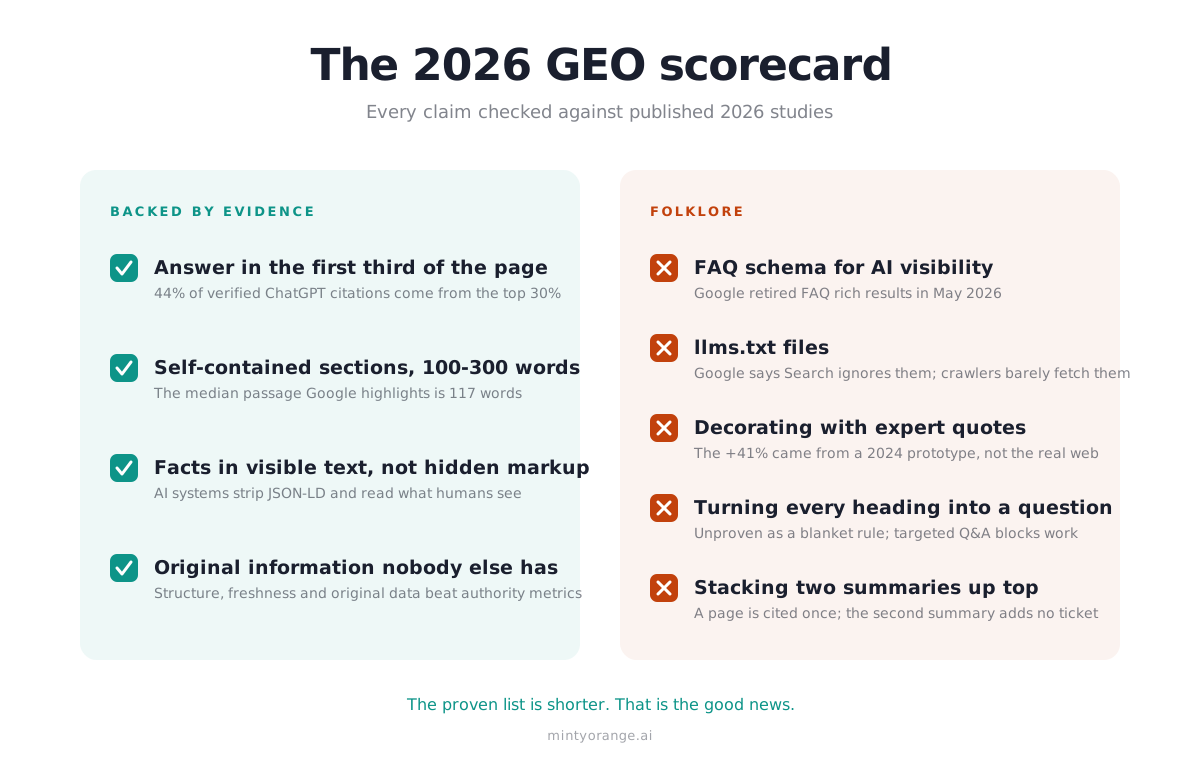
Four things have solid 2026 evidence behind them: putting the answer in the first third of the page, writing sections of roughly 100 to 300 words that can stand alone, stating facts in visible text instead of hidden markup, and publishing original information nobody else has. Most of the rest of the standard GEO checklist, FAQ schema, llms.txt files, borrowed expert quotes, question-grammar headings, stacked summaries, does not survive contact with the data.
If you run a blog or a content site, chances are someone has sent you one of these checklists this year. An agency, a LinkedIn guru, a well-meaning newsletter. They keep getting longer, and I kept noticing that the evidence behind them was not getting longer at all. So I did what I always do when a claim smells confident: I went looking for the studies.
This post walks through the checklist point by point. What gets recommended, what the published data says, and what to do instead. The good news runs through the whole piece: you need to do less than the checklist says. You just need to do the right things.
What the Evidence Actually Supports
Before the folklore, the real list, because the honest version of GEO is not "nothing works". Four tactics keep showing up in serious 2026 data. First: put the answer high on the page. Kevin Indig analyzed 1.2 million ChatGPT answers with 18,012 verified citations and found that 44.2% of cited passages come from the first 30% of a document, with a steep drop after that. That is correlation, not a placement experiment, but the shape of the curve is hard to argue with: good writers put answers early, and engines quote what sits early.
Second: write sections that stand alone. An analysis of 15.7 million Google AI Mode citations found that 47.7% are scroll-to-text links that jump straight to the quoted passage, and the median highlighted passage is 117 words. The machine lifts one self-contained chunk. Separate research on AI Overview answers points the same way: passages of 100 to 300 words cover the bulk of what gets used. If a section of your article cannot be understood on its own, it cannot be quoted on its own.
Third: visible text beats invisible markup. The AI systems that fetch your page strip structured data and read what a human sees. More on that in the FAQ schema section below, because this is where the folklore starts. And fourth: original information wins. Surfer analyzed 5 million AI citations and found domain authority correlates with citations at roughly zero. Their conclusion: structure, freshness and original data beat classic authority metrics. The thing that gets you quoted is the detail nobody else published.
Folklore 1: FAQ Schema
The advice: add FAQPage markup so AI can read your questions and answers. The evidence: Google retired FAQ rich results for good in May 2026, with a quiet note in the developer docs rather than an announcement. And in a rare causal study, Ahrefs tracked 1,885 pages that added schema markup against 4,000 control pages and found no significant citation lift on any platform. Google AI Overviews moved slightly negative for the schema group. One honest caveat: the studied pages were already heavily cited, so this is not the final word for small sites. But it is the best data we have, and it points firmly at nothing.
The part that makes sense once you hear it: the systems strip the markup and read the visible page. So the verdict is simple. If your theme already outputs FAQ markup, leave it, it does no harm. But do not pay anyone to add it for AI visibility. Write the question and the answer as visible text on the page instead. That part genuinely works, because it is the part the machine reads.
Folklore 2: llms.txt
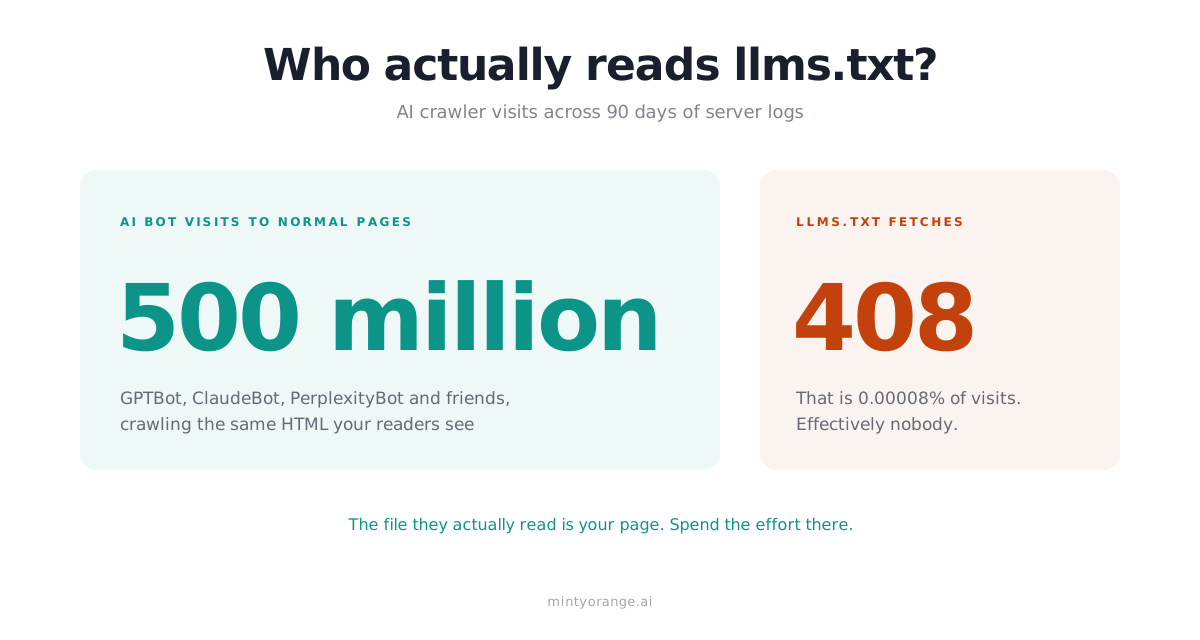
The advice: create an llms.txt file so AI systems know what your site is about. The evidence: Google updated its documentation in June 2026 to say Search ignores llms.txt entirely, positive or negative. No major AI company has committed to reading it in production. And the server logs are brutal: across 500 million AI bot visits in 90 days, the file was fetched 408 times. GPTBot, ClaudeBot and PerplexityBot crawl your normal HTML, exactly like your readers. One analysis even found that a citation-prediction model got better when the llms.txt variable was removed. It was pure noise.
We had one ourselves, a little company business card at mintyorange.ai/llms.txt, from back when the idea was new. We removed it. Not because it hurt anything, but because keeping it felt dishonest while writing this paragraph. If an agency is charging you for llms.txt files, that money is better spent on the page itself. That is the file they actually read.
Folklore 3: Decorating With Expert Quotes
The advice: add quotes from experts to your articles, because "quotes lift AI visibility by 41%". This one has a traceable origin story. The number comes from the Princeton GEO study, presented at KDD 2024, which tested content tweaks inside a generative engine prototype the researchers built themselves. In that sandbox, adding quotations lifted visibility by 41%. Then came the follow-up nobody quotes: C-SEO Bench, published at NeurIPS 2025, re-tested the same tactics under realistic competitive conditions across many domains. The effects collapsed to roughly zero, and some turned negative.
The distinction that matters: material you collected yourself is not a trick. The guide you interviewed, the price a local told you on site, the thing you saw with your own eyes. That is original information, the exact currency AI systems reward. What the data debunks is decoration, sprinkling borrowed authority quotes over an article and expecting a visibility lift. The prototype said yes. The real web says no.
Folklore 4: Turning Every Heading Into a Question
The advice: rewrite all your H2s as questions, because AI matches questions to questions. The evidence: there is none for the blanket version. No published 2026 study shows that question-grammar headings lift citations across the board. What does hold up is narrower and more useful: targeted question-and-answer blocks, a clear question followed by a direct visible answer, mirror how people search and keep sections self-contained. That is why one strong Q&A at the top of an article works.
So ask one real question where the reader would ask it, and answer it immediately. Let the rest of your headings describe their sections like headings always have. An article where every single heading interrogates you reads like a quiz, and there is no data saying the machine prefers it.
Folklore 5: Stacking Two Summaries at the Top
The advice, and this one is everywhere right now: open with a lead summary, then a key-facts box repeating the same points, then jump links, and only then the article. Typically 100+ words of apparatus before the first real sentence. The mechanics of retrieval make this pointless. AI systems split your page into passages, pick the one passage that best answers the question, and cite the page as the source. One URL, one slot in the source list. A second summary cannot earn a second citation. It can only compete with your first summary over which one gets extracted.
And the deep-link data shows the jump links are redundant too: the machine builds its own table of contents, passage by passage, straight into the text it wants. The cost of the stacked intro is certain, every reader scrolls past it. The benefit is unproven. One summary at the top is the concession the format needs. After that, let text be text. Add nothing. Delete something.
Folklore 6: Chasing Position 1 Before Anything Else
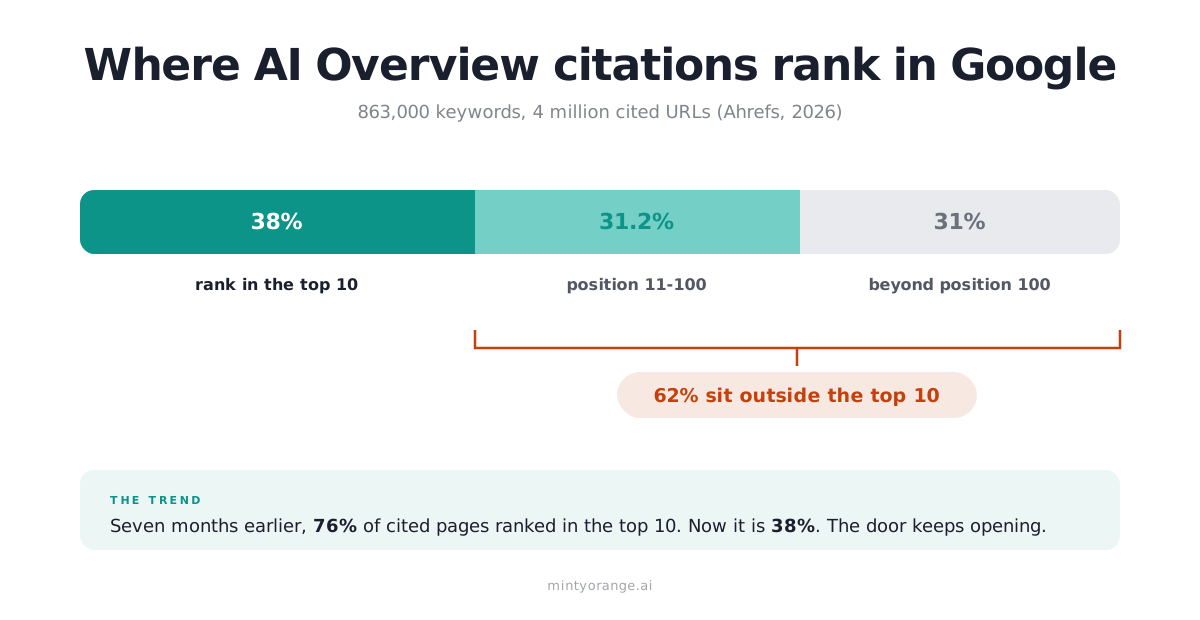
The advice: get into the top 10 first, then worry about AI. The evidence says the gate is gone. Ahrefs analyzed 863,000 keywords and 4 million cited URLs: only 38% of pages cited in AI Overviews rank in the top 10 for that query. Seven months earlier it was 76%. Meanwhile 31% of citations come from beyond position 100, pages classic SEO would call invisible. Domain authority tells the same story at roughly zero correlation.
Honesty requires the other half: ranking still helps. In our own tracking data, articles that already ranked in Google’s top 10 converted to their first AI citation at the highest rate of any group. Authority and citations pull in the same direction. But it is a tailwind now, not a gate. You no longer need position 1. You need the best extractable answer on the topic.
Two Half-Truths That Deserve a Fairer Verdict
The year in the title. "Put 2026 in your title for AI visibility" is mislabeled rather than useless. There is no 2026 measurement showing the year lifts citations. There is good reason to keep titles current anyway: the year is a click-through cue in classic search, and a stale year actively repels clicks. The lever that shows up in freshness data is a visible updated date with a real update behind it. Update the content, show the date, and let the title reflect it. Just file it under CTR, not under GEO.
The table of contents. No study shows a TOC lifting AI citations, and the deep-link data explains why: the structure information already lives in your headings, and the machine links directly to passages. But a TOC still helps humans navigate long pieces, and in classic search it can occasionally produce jump links under your result. Keep it for readers on long guides if you like it. Just know it is doing nothing for citations.
The Honest Checklist
Here is what I do on my own blog, and what I deliberately skip. It is shorter than the list your agency sent you. That is the point.
What I actually do
- ✓Above all: information nobody else has. Prices I asked for on site, details you only know if you were really there. What the web already says a thousand times, I keep short or skip. You get cited for the one detail nobody else offers.
- ✓The most important answer sits at the very top, not after a warm-up.
- ✓One bullet summary, as a closing note at the end. In between, text is allowed to just be text.
- ✓Definition sentences with real numbers instead of vague claims: "X costs Y and opens at Z" rather than "worth an early visit".
- ✓Sections of 150 to 300 words, each quotable on its own.
- ✓Numbers and facts in the running text, not only in graphics.
- ✓Lists and tables where the content calls for them anyway.
- ✓My own photos, a clear author line, a visible date.
What I deliberately don’t do
- ✓FAQ schema. Google retired FAQ rich results for good in May 2026. Visible question-and-answer text works, the invisible markup behind it does not.
- ✓An llms.txt file. Google officially says Search ignores it, and the big AI crawlers simply don’t fetch it. They read the normal page. We removed ours.
- ✓Writing for machines only. Whether humans share an article, on Reddit for example, is a signal too. And people share what moves them.
- ✓Turning every heading into a question. A few targeted Q&A blocks, yes. The rest can stay normal.
- ✓Letting AI write the articles. AI can only remix what is already out there. What gets cited is what isn’t in there yet.
- ✓Chasing rankings. Over 60 percent of AI citations come from pages outside the top 10. I don’t need position 1 anymore, I need the best extractable answer.
Questions
Frequently Asked.
Google retired FAQ rich results in May 2026, and a controlled Ahrefs study of 1,885 pages found no citation lift from adding schema on any AI platform. Existing markup does no harm, so you can leave it. But visible question-and-answer text on the page is what AI systems read and quote.
You can, or you can leave it, it makes no measurable difference either way. Google states that Search ignores the file, and server logs show AI crawlers almost never fetch it: 408 fetches across 500 million AI bot visits. We removed ours and put the effort into the pages themselves, which is what the crawlers read.
No. 62% of Google AI Overview citations now come from pages outside the top 10, and 31% come from beyond position 100. Ranking still helps, in our own tracking the already-ranking articles converted to citations at the highest rate, but it is a tailwind, not a requirement.
Borrowed quotes as decoration, no. The famous +41% figure came from a 2024 prototype experiment, and the NeurIPS 2025 re-test under realistic conditions found effects near zero. Original quotes you collected yourself are different: they are unique information, which is exactly what AI systems reward.
The tactics with real evidence behind them: a direct answer in the first third of the page, self-contained sections of roughly 100 to 300 words, facts stated in visible text, and original information that exists nowhere else. Structure and substance, not sidecar files and markup.
If you want to know which of these applies to your own articles, run a page through our free check. It looks at the things that genuinely gate a page, starting with whether AI systems can retrieve and extract it at all, and skips the folklore. No promises about citations, because nobody honest can make those. Just the short list, applied to your page.