Does AI Search Matter for My Business?
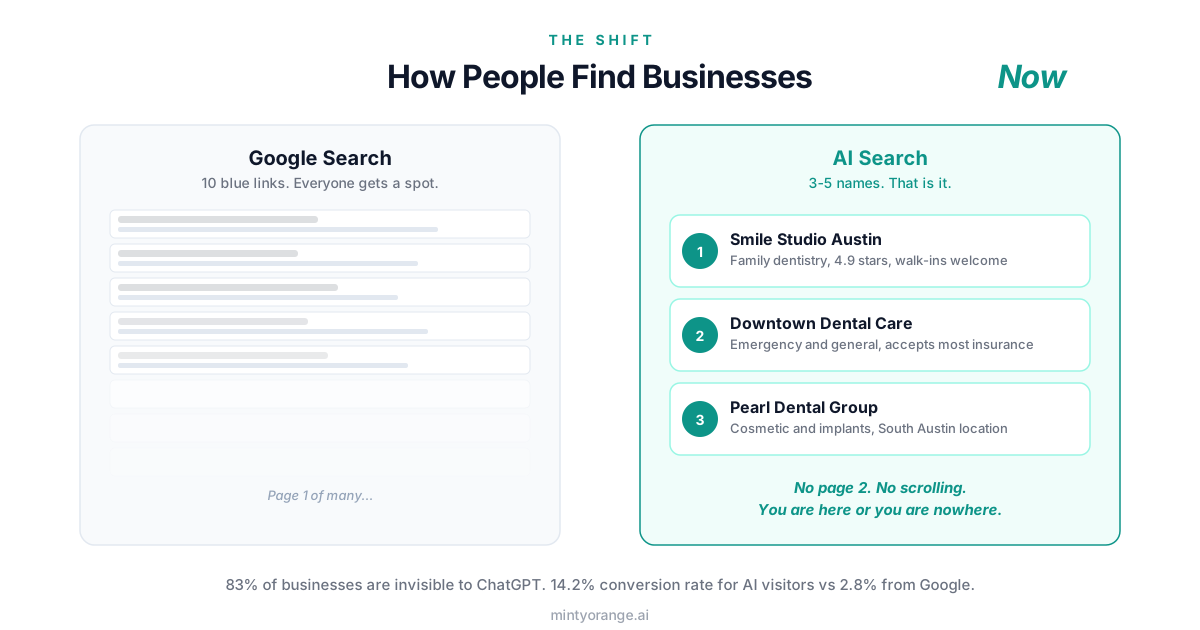
Yes. When someone asks ChatGPT “best dentist in Austin” or “which project management tool works for small teams,” the AI names 3-5 options. If your business is not one of them, that potential customer just chose a competitor without ever knowing you existed. 45% of consumers now use AI tools to find local businesses, up from 6% in 2025, according to BrightLocal’s 2026 Local Consumer Review Survey. This guide covers the practical steps to make sure AI knows your business exists, understands what you do, and recommends you.
Try this right now. Open ChatGPT. Type the kind of question your customers would ask. “Best dentist in [your city].” “Which [your product type] is best for [common use case].” “Recommended [your service] near me.”
Does your business show up?
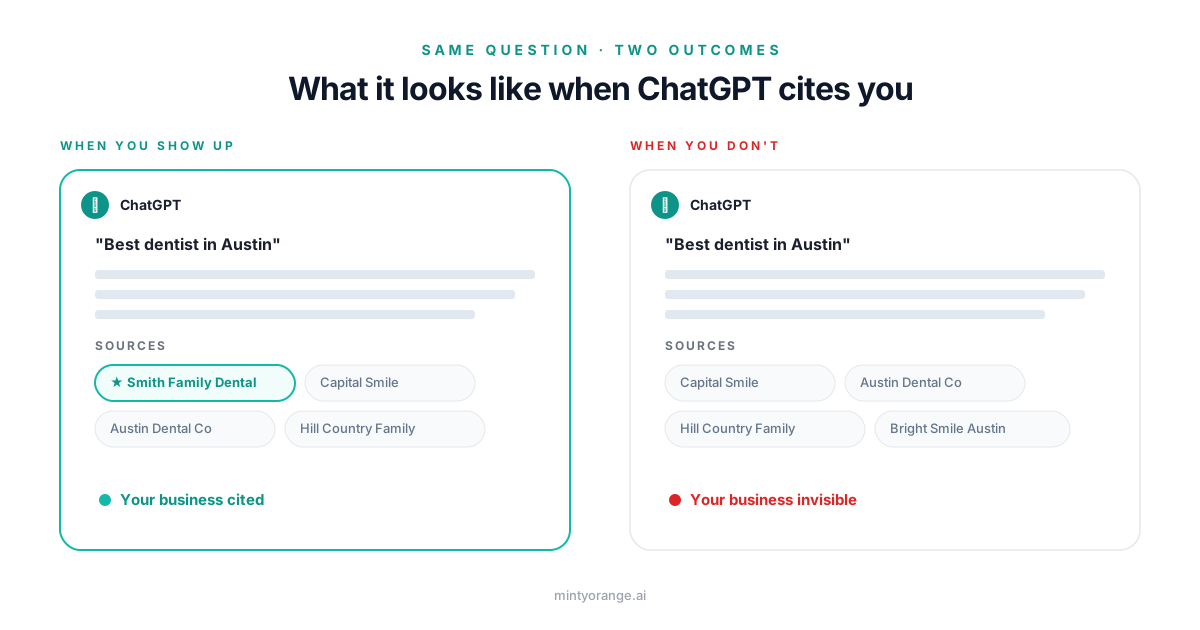
If the answer is no, you are in the same position as the vast majority of businesses. A LocalFalcon study of 189,905 ChatGPT searches found 83% of restaurants were invisible to ChatGPT, against 14% on Google. Google might know you. ChatGPT might not. And the people searching through AI are unusually valuable: Semrush measured AI-search visitors converting at about 4.4 times the rate of regular organic visitors.
This is not complicated to fix. It is a set of specific, practical steps. Most of them take less than an hour.
What AI Needs to Know About Your Business
AI builds a picture of your business from everything it can find across the web. Your website, your listings on Google and Bing, your reviews, your social profiles, and what other websites say about you.
The businesses that show up in AI answers are the ones where the AI can confidently answer four questions:
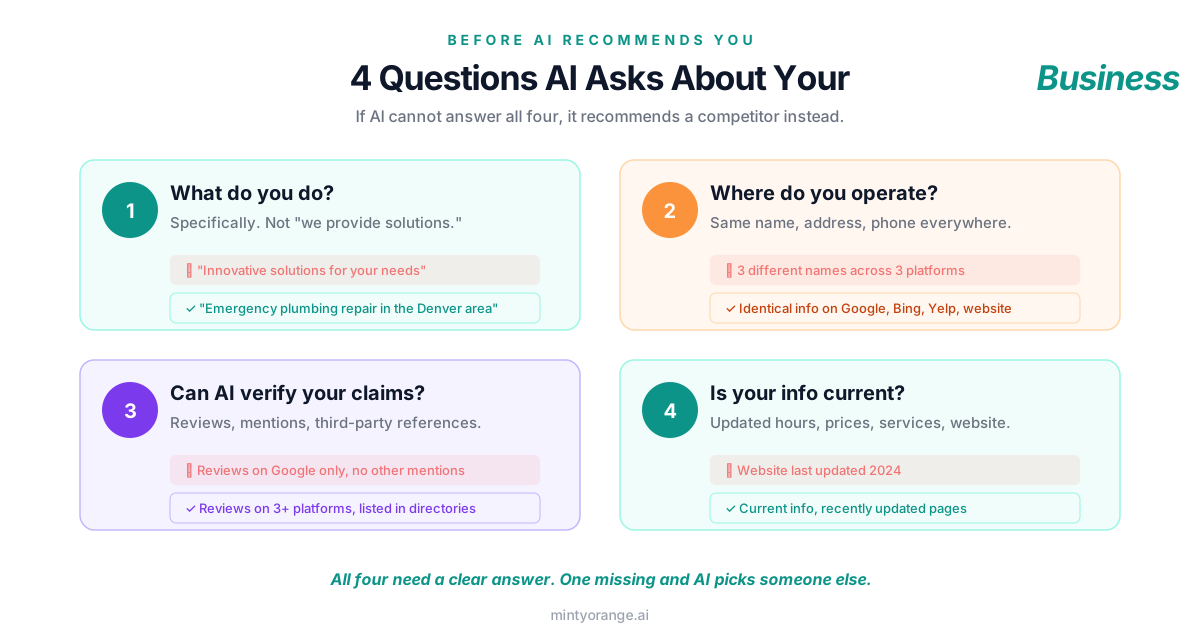
What do you do? Specifically. “Full-service plumbing for homes and businesses in the Denver area” is useful. “We provide innovative solutions” is not.
Where do you operate? For local businesses, this means your address and service area are listed consistently across every platform. For businesses that sell internationally, this means your website clearly states which regions you serve.
Can AI verify your claims? AI cross-checks what you say about yourself against what others say about you. Reviews on Yelp, Google, Trustpilot, and industry platforms all feed into this. So do mentions on third-party websites and “best of” lists.
Is your information current? Outdated hours, old pricing, discontinued services, or a website that has not been touched in two years all reduce AI’s confidence in recommending you.
If AI cannot confidently answer these four questions, it will recommend a competitor who made the answers easier to find.
For Local Businesses: 7 Steps
If you serve customers in a specific area (restaurant, dental practice, law firm, salon, contractor, retail shop), here is where to focus.
1. Complete your Google Business Profile
Go to business.google.com. Fill out every single field. Hours, phone, website, services, attributes, photos. Use the description field to clearly state what you do and where. Do not leave anything blank. AI systems (especially Google’s) pull heavily from this data.
2. Register on Bing Places
This is the step most businesses skip. ChatGPT’s web search draws on Bing’s index, OpenAI’s own crawler (OAI-SearchBot), and results that increasingly track Google. Bing is no longer the gate it was in 2025, but it still feeds Copilot and part of that mix, and a business with no Bing Places listing is simply absent from one of the places ChatGPT looks.
Go to bingplaces.com. You can import your listing directly from Google Business Profile, which takes about 3 clicks. Or add it manually. Either way, 10 minutes.
3. Use the exact same business name, address, and phone everywhere
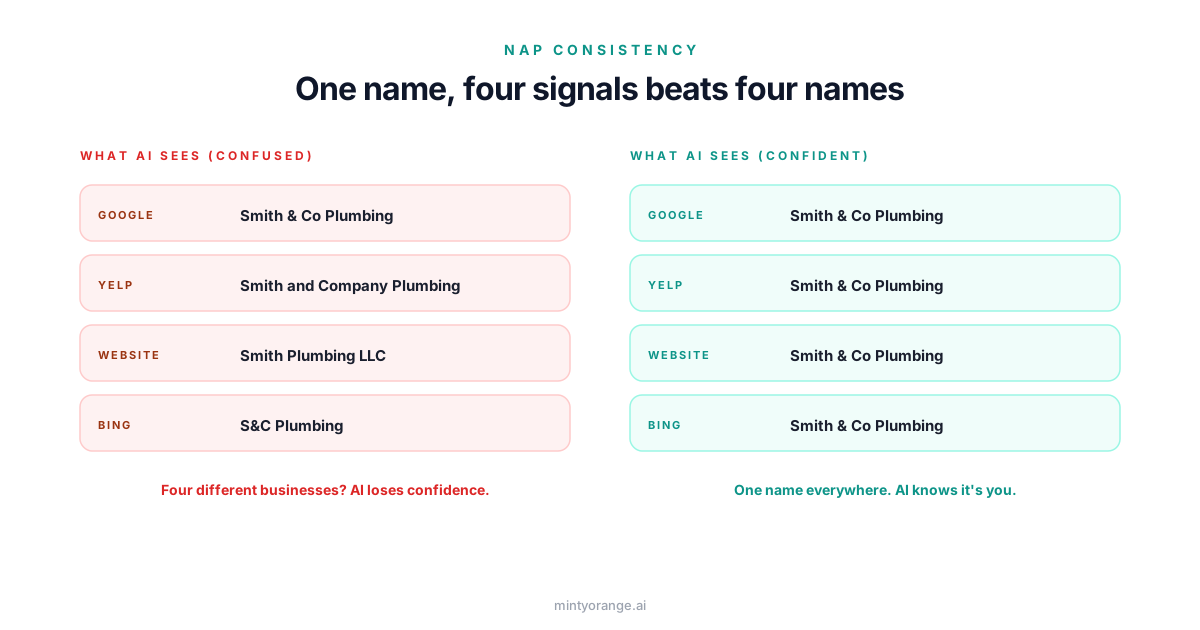
AI checks your business information across multiple directories. If your name is “Smith & Co Plumbing” on Google but “Smith and Company Plumbing” on Yelp and “Smith Plumbing LLC” on your website, AI gets confused and loses confidence.
Pick one exact version of your business name, one address format, and one phone number. Use that version on Google, Bing, Yelp, Apple Maps, your website, your social profiles, and any industry directories. Consistency is one of the strongest signals AI uses.
4. Get reviews on more than just Google
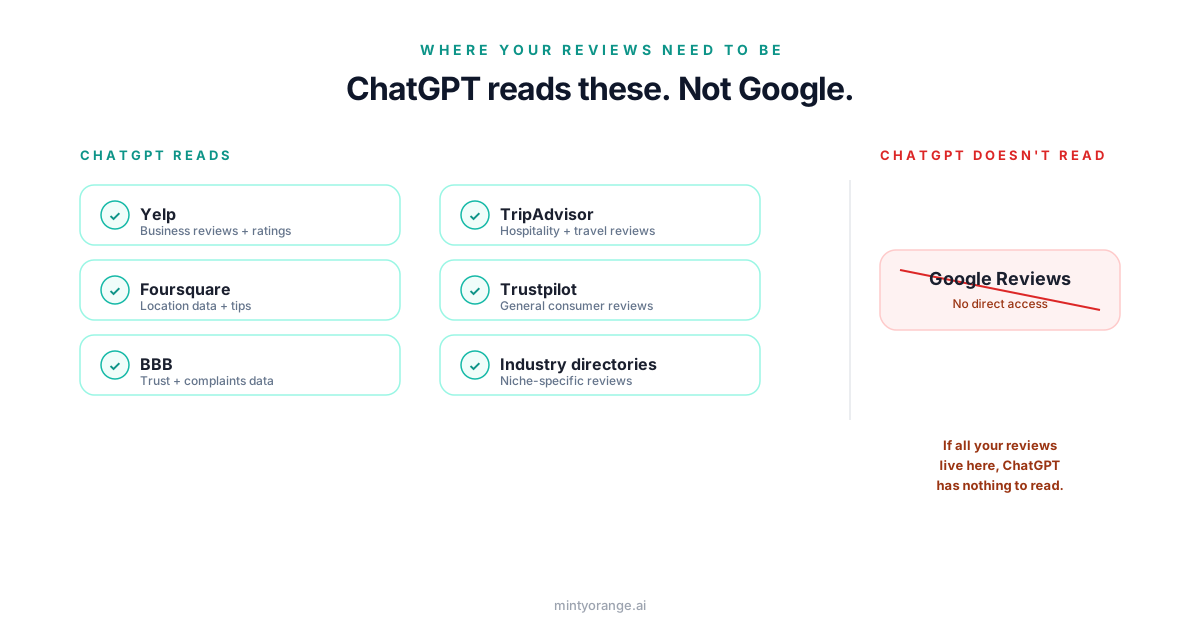
Google reviews help you on Google. But ChatGPT does not appear to have direct access to Google reviews. It reads Yelp, Foursquare, BBB, TripAdvisor, and industry platforms instead.
If all your reviews live on Google and nowhere else, ChatGPT has almost nothing to work with when deciding whether to recommend you. Ask happy customers to leave reviews on two or three different platforms. And the words in the reviews matter, because AI reads the text, not just the star rating.
5. Ask your web developer to add structured data
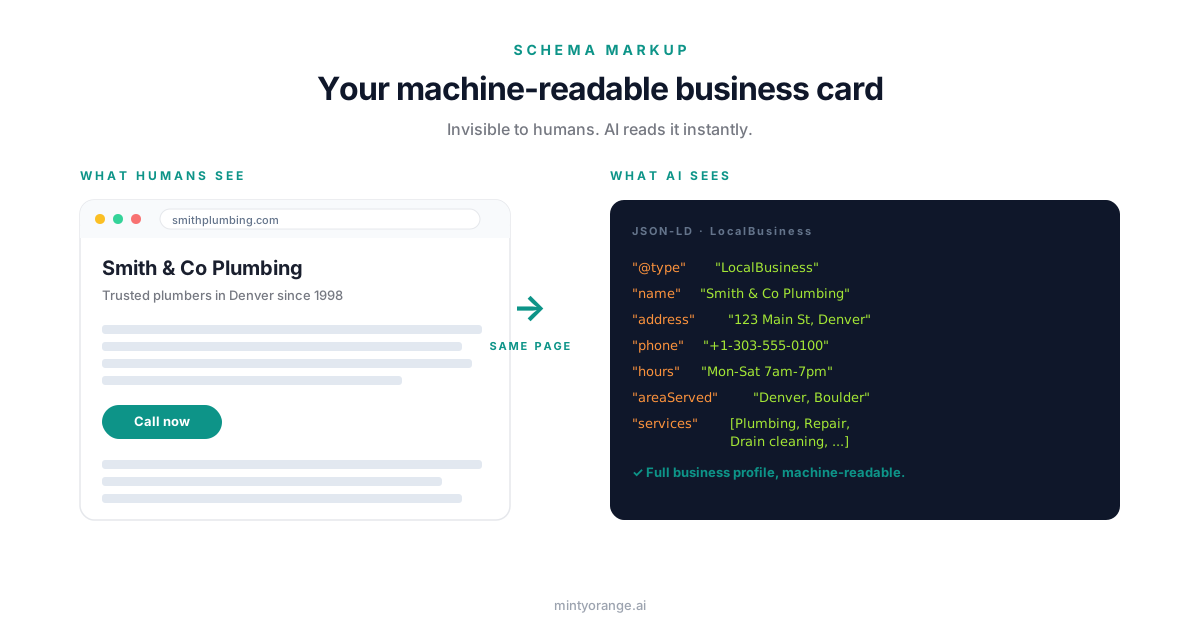
There is a type of invisible code called “structured data” (or “schema markup”) that tells AI exactly what your business does, where it is located, what your hours are, and how to contact you. It is like a machine-readable business card embedded in your website.
If you have a web developer, ask them to add “LocalBusiness schema” to your homepage. If you use WordPress, plugins like Yoast SEO or Rank Math can set this up for you. Our 8-step guide to getting cited by AI covers the structural fundamentals in more detail.
6. Create separate pages for each service and location
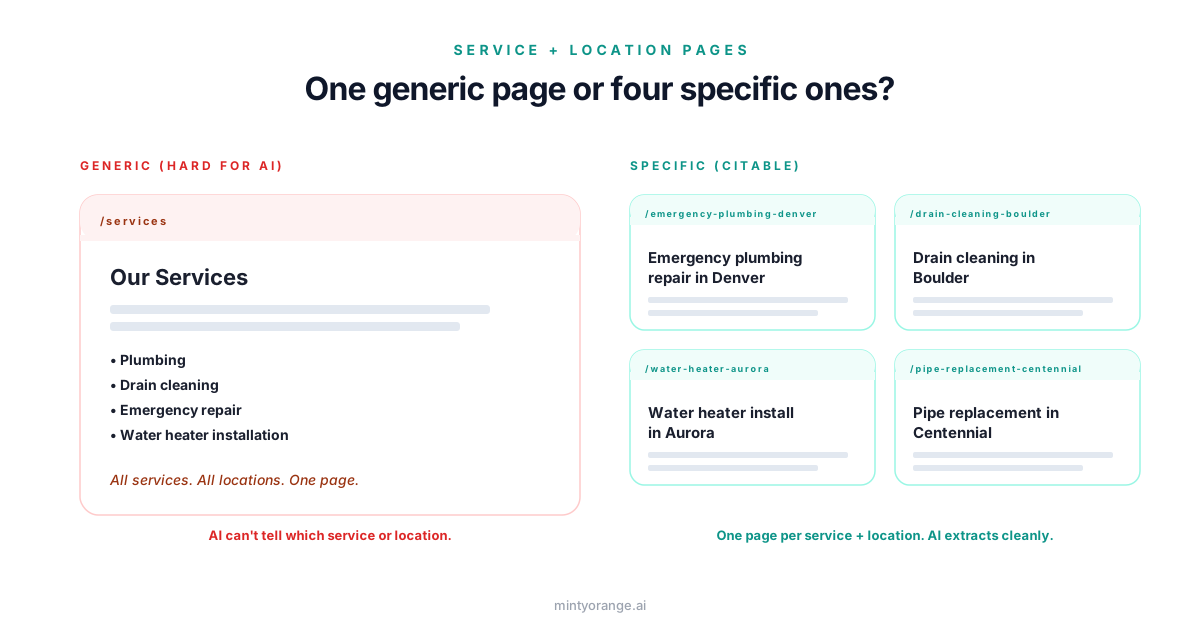
Instead of one generic “Services” page, create individual pages for each service you offer and each area you serve. “Emergency plumbing repair in Denver” as its own page gives AI a clear answer when someone asks that exact question.
Write these pages the way your customers would ask the question. If they search “dentist for kids in Brooklyn,” your page title should be close to that.
7. Test your AI visibility
Go back to ChatGPT, Perplexity, and Google. Ask the questions your customers would ask. Try different phrasings. Do this every few weeks to track progress.
If you want a quicker baseline, run your website through our free AI-Readiness Score (no account needed).
For Businesses That Sell Beyond Their Local Area: 5 Steps
If you sell products or services online (e-commerce, SaaS, consulting, agencies, courses), the approach shifts.
1. Make your brand identity consistent across the web
AI builds a profile of who you are from everything it can find. Your website, your LinkedIn page, your social profiles, any directory listings. If your brand name, description, and website URL are consistent everywhere, AI can confidently identify you. If they vary from platform to platform, AI treats them as potentially different businesses.
Check that your company name is spelled exactly the same way on your website, LinkedIn, Instagram, Facebook, and any industry directories. Same name, same URL, same one-sentence description.
2. Get listed on industry directories and comparison sites
When someone asks ChatGPT “best project management tool for freelancers,” the AI looks for agreement across multiple sources. If your product shows up on G2, Capterra, industry roundup articles, and relevant comparison pages, AI has multiple data points saying “this company is real and relevant.” If you only exist on your own website, AI has no way to verify your claims.
For e-commerce: product review sites, marketplace listings. For SaaS: G2, Capterra, Product Hunt. For consulting: industry associations, professional directories. The platforms vary by industry, but the principle is the same.
3. Answer the questions your buyers are asking
Half of B2B software buyers now start their research in an AI chatbot, according to G2’s April 2026 survey of over 1,000 buyers. They ask things like “which CRM works best for small agencies” or “how much does shipping cost from the US to Europe.”
If your website has clear, direct answers to these questions, AI can extract them. If your website only has marketing copy and feature lists, AI has nothing useful to cite.
Put the direct answer in the first sentence of each page or section. Then add the context and details below. AI extracts from the top.
4. Get mentioned on other websites
A MuckRack analysis of 25 million AI citations found that 84% pointed to third-party sources, not the brand’s own site. What other people say about you carries more weight than what you say about yourself.
Guest articles on industry sites, podcast appearances, expert quotes in publications, reviews on relevant platforms, and genuine participation in communities (Reddit, industry forums) all build the third-party signal layer that AI uses to decide who to trust. We cover this in detail in our off-site signals playbook.
5. Make sure AI bots can access your website
Roughly 1 in 4 sites in a recent 3,000-site audit blocked at least one major AI crawler through security settings nobody consciously configured. If your website uses Cloudflare, a WordPress security plugin, or has specific rules in your robots.txt file, it is worth checking whether AI bots are being blocked.
Our bot-blocking guide walks through the three places to check and how to fix them in about five minutes.
Key Takeaways
- ✓45% of consumers now use AI to find local businesses, up from 6% in 2025 (BrightLocal 2026). AI returns only 3-5 results per query, and a LocalFalcon study found 83% of restaurants were missing from ChatGPT results.
- ✓AI visitors convert at roughly 4.4 times the rate of organic visitors (Semrush). Smaller traffic, far more valuable per visitor.
- ✓AI needs to know four things about your business: what you do, where you operate, whether others confirm it, and whether your info is current.
- ✓For local businesses: Google Business Profile, Bing Places, consistent business info everywhere, reviews on multiple platforms, structured data, service-specific pages.
- ✓For international businesses: consistent brand identity, industry directory presence, answering buyer questions directly on your website, earning mentions on other sites.
- ✓Test your visibility by asking ChatGPT, Perplexity, and Google the questions your customers ask. If you do not show up, the steps above are your roadmap.
Where Minty Orange Fits
If you want to understand where your business currently stands in AI search, start with our free AI-Readiness Score. Enter any URL, no account needed, and get a baseline in seconds.
Minty Orange optimizes your web pages for both Google rankings and AI citations, tracks where you show up across ChatGPT, Perplexity, and Google AI Overviews, and shows you exactly where the gaps are so you know which of the steps above need attention.
Questions
Frequently Asked.
Yes. 45% of consumers now use AI tools to find local businesses, up from 6% in 2025, according to BrightLocal’s 2026 Local Consumer Review Survey. When someone asks ChatGPT for a recommendation in your category and your city, it names 3-5 businesses. If you are not one of them, that customer went to a competitor without ever seeing your name.
ChatGPT does not appear to have direct access to Google’s review system. It pulls business information from Bing, Yelp, Foursquare, BBB, TripAdvisor, and industry platforms. If all your reviews are on Google, ChatGPT has very little to evaluate you with. Build reviews on at least two or three platforms.
No. The core steps (business listings, reviews, consistent information, structured data) do not require a blog. If your business has a website with clear information about what you do and who you serve, that is enough to start. Adding a FAQ page that answers common customer questions can further improve your AI visibility without requiring ongoing content production.
Open ChatGPT, Perplexity, and Google. Ask the questions your customers would ask in natural language (“best [your service] in [your city]” or “which [product type] is best for [use case]”). Check whether your business appears in the answers. Try several variations over a few days.
Complete your Google Business Profile, then register on Bing Places. Most local businesses have never done the second one. ChatGPT’s search draws on Bing alongside its own crawl and Google-aligned results, so a missing Bing listing means you are absent from one of the places it looks. It takes 10 minutes and costs nothing.
Changes to business listings and structured data typically take 2-4 weeks to be reflected in AI answers. Review-building and third-party mentions are slower but compound over time. The businesses seeing results fastest are the ones that start with the basics (Bing Places, consistent info, reviews on multiple platforms) and build from there.