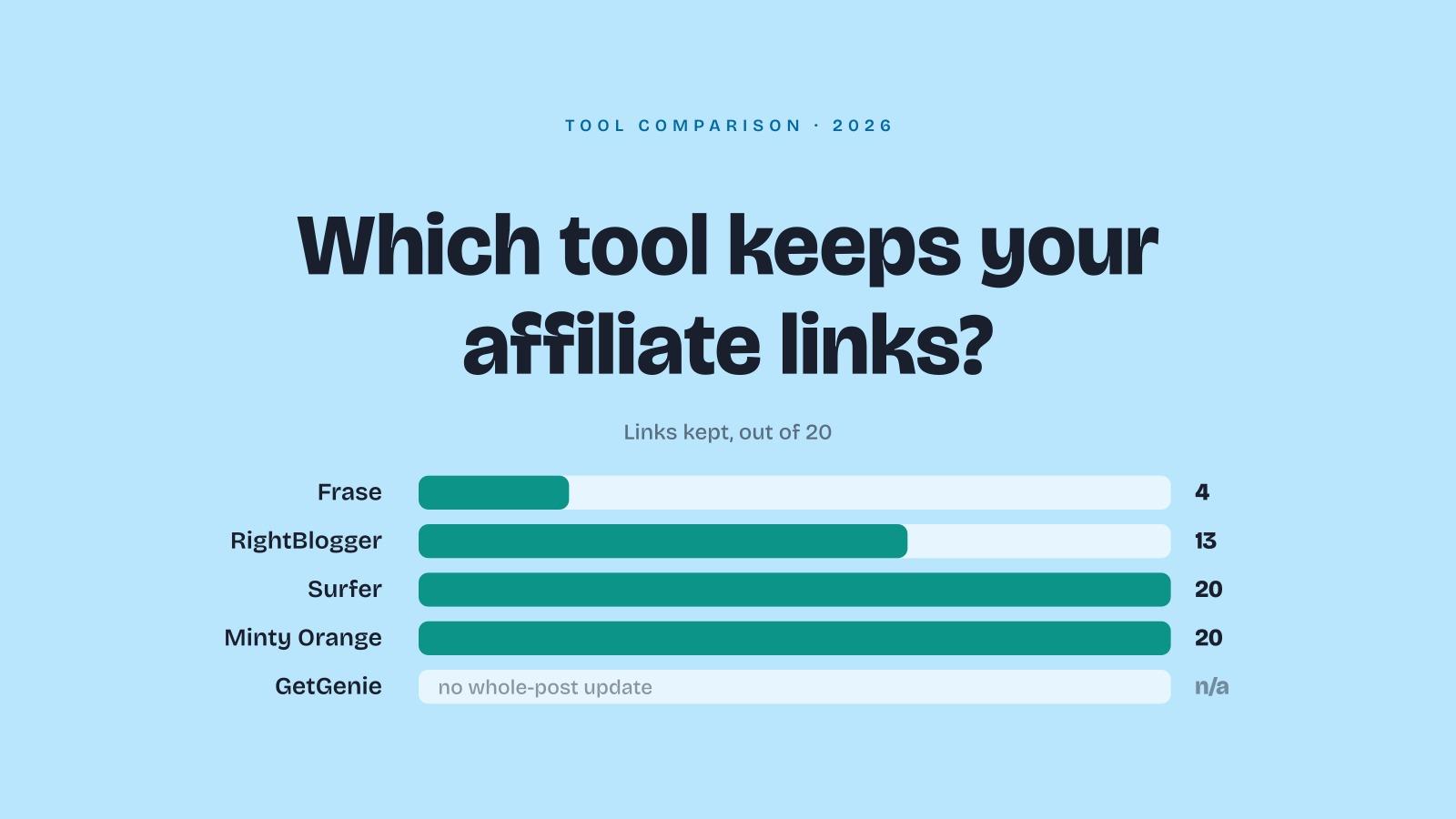
- I ran one real post through 5 tools and counted links, rel attributes, images, widgets and FAQ answers in each editor.
- The 3 tools that pull your page into their own editor lost both of my embedded widgets, the booking map and the Pinterest pin.
- 4 of the 5 stripped the sponsored attribute that Amazon and other programs ask you to keep.
- Frase promised it keeps your links, then removed 16 of 20 and all 15 images, in the same session.
- Surfer kept every link but wrote new sentences in my voice, including a claim about elephant sanctuaries I never made.
I asked Google AI Mode which tool updates old blog posts without losing affiliate links. It gave me a comparison table with a column called “How it handles affiliate links,” and every tool in it said Safe. The sources underneath were 2 YouTube videos, a Reddit thread and a couple of listicles. Nobody had put a post through a tool and counted what came back. So I did, on a post of mine that earns money.
The Post I Used
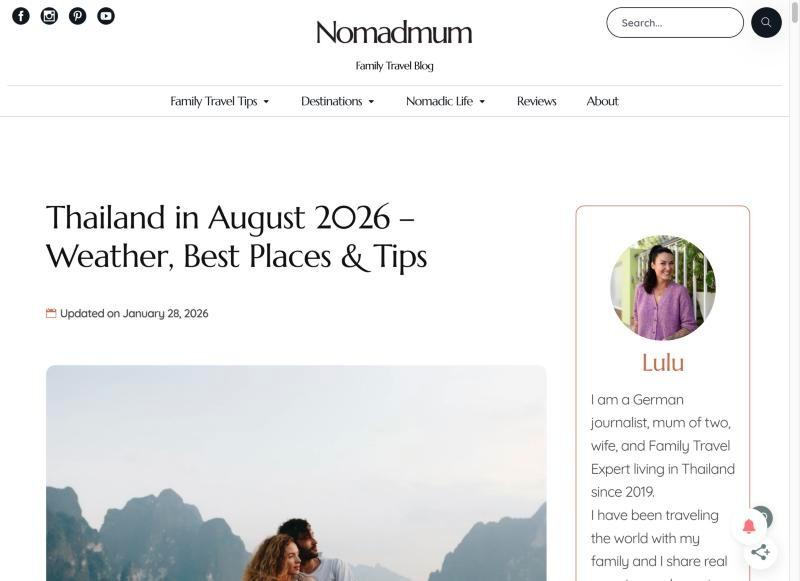
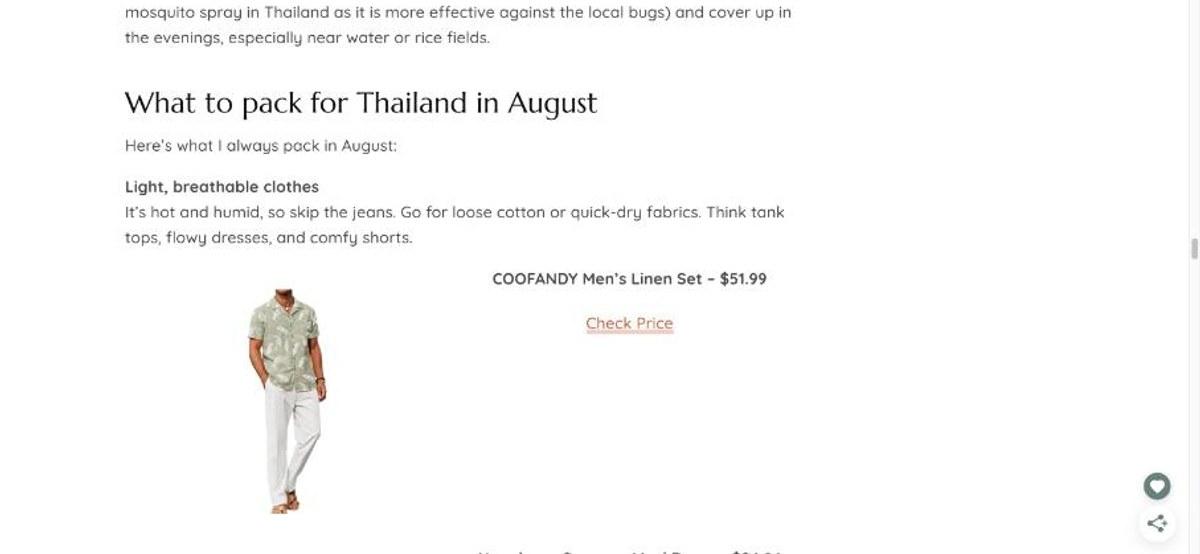
Thailand in August on my travel blog, a post that earns money and is built like one: 1,565 words, 20 link targets, 15 images, 2 embedded widgets, a weather table and 6 FAQ questions with their answers. 9 of the links are Amazon with my affiliate tag and 3 are hotel bookings, and all 12 carry rel="nofollow sponsored". Nothing was saved to my live blog.
What Survived
| Tool | Link targets | sponsored kept | Images | Widgets | FAQ answers |
|---|---|---|---|---|---|
| RightBlogger import only, see below | 13 of 20 | no | 15 of 15 | 0 of 2 | not tested |
| Surfer Auto-Optimize | 20 of 20 | no, rel removed entirely | 15 of 15 | 0 of 2 | 0 of 6 |
| Frase Full rewrite | 4 of 20 | no | 0 of 15 | 0 of 2 | 6 of 6 |
| GetGenie Content Rewriter | no links possible | n/a | n/a | n/a | n/a |
| Minty Orange report plus Magic Apply, plugin 1.9.1 | 20 of 20, plus 3 new internal | yes | 15 of 15 | 2 of 2 | 6 of 6 |
Frase Told Me It Keeps Links, Then Removed 16 of Them
Frase says the opposite in its own dialog, in the same session, about 30 seconds before it does it.
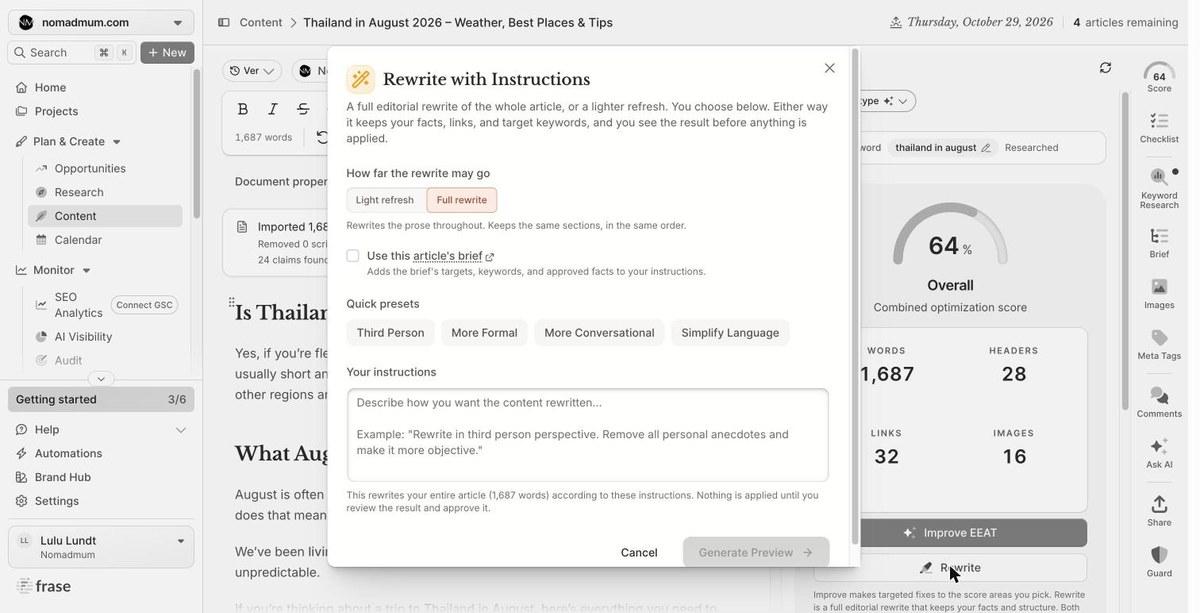
Then its own preview, on the next screen, tells you what is about to happen. 15 images removed. 851 words removed. And in the diff you can watch my opening line change from “We've been living in Thailand” to “Since 2019, I've been living in Thailand.” My blog is written by 2 of us. Frase made me singular.
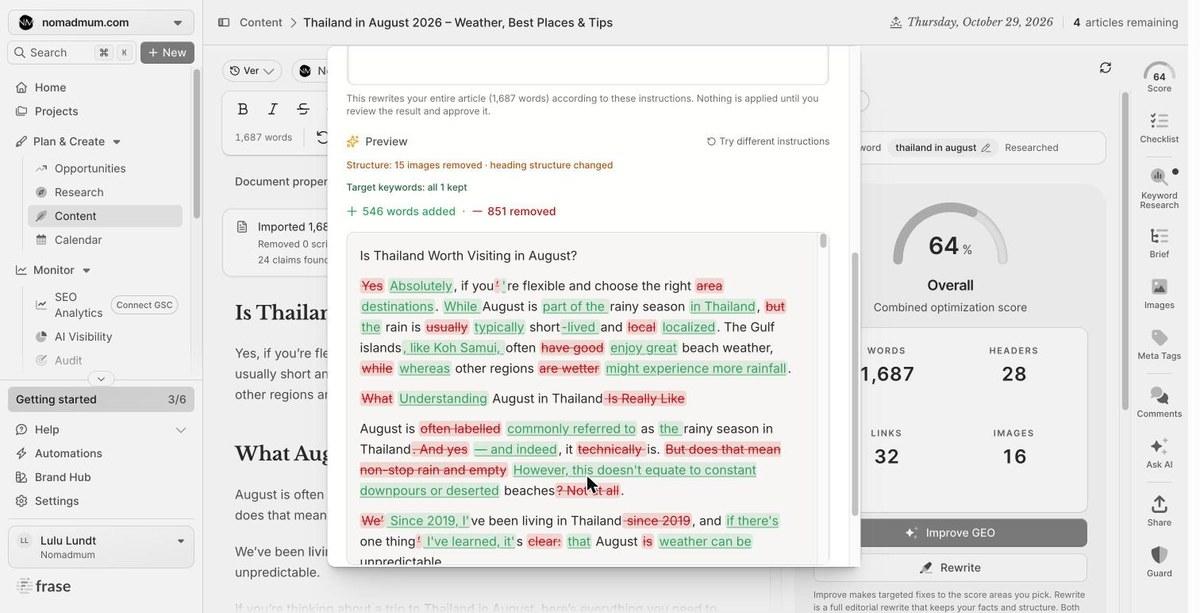
After I applied it, 4 of my 20 link targets were left. All 9 Amazon links were gone. The packing section still existed, still told you what to pack, and had not a single product box in it. The weather table and all 6 FAQ answers did survive, which the other rewriters mostly did not manage.
Surfer Kept Every Link and Wrote Sentences I Never Wrote
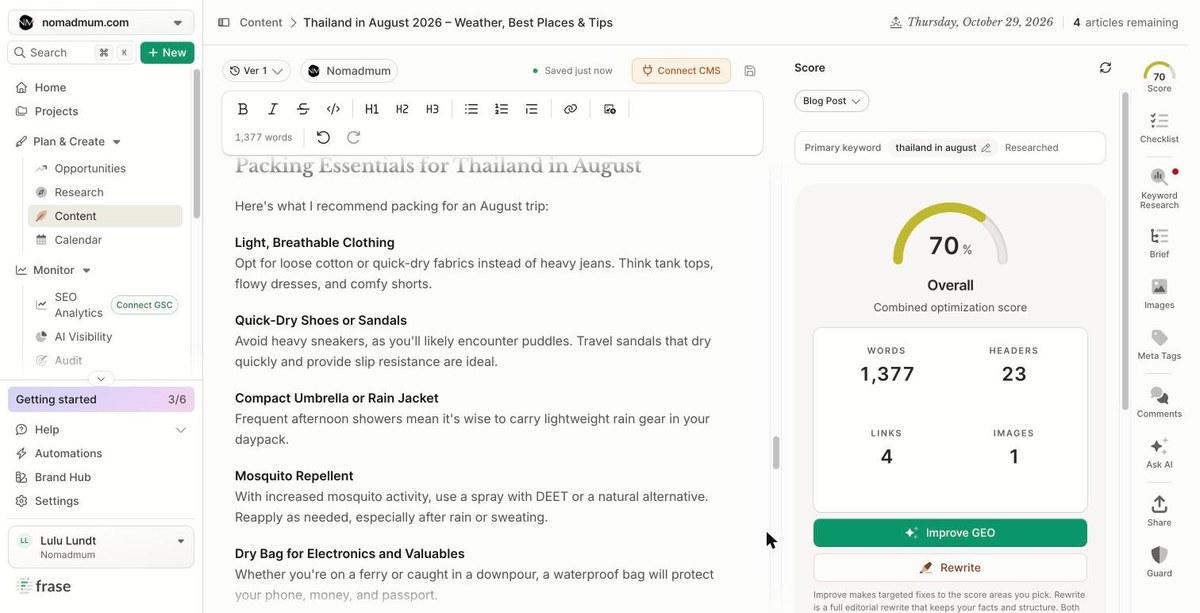
Surfer was the strongest result on links of anything that imports your page. All 20 targets survived Auto-Optimize, Amazon tag included. The content score went from 70 to 87, with its AI Search sub-score jumping to 96.
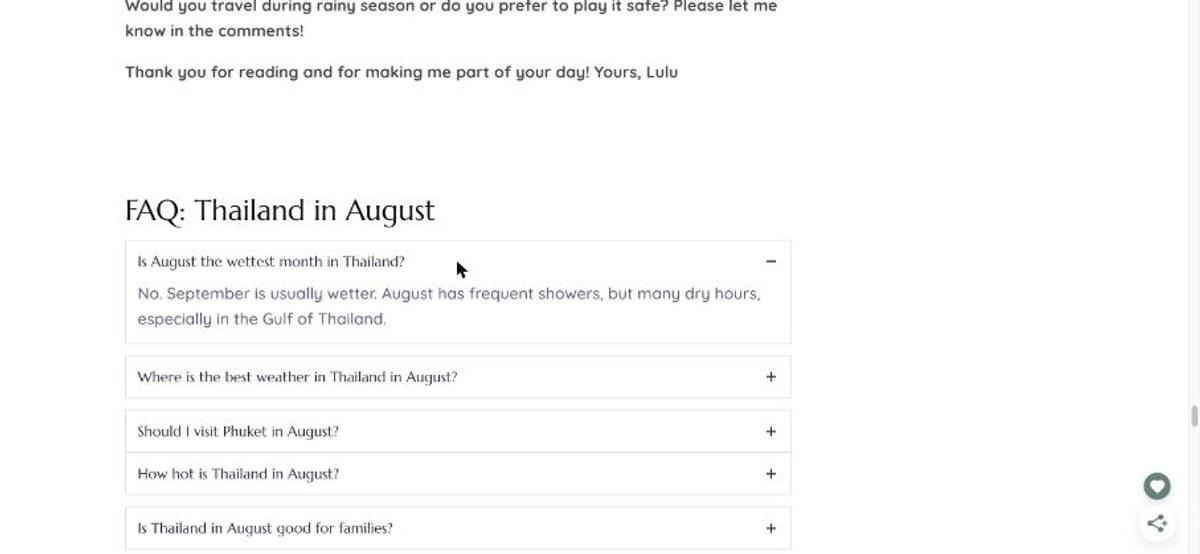
But it took the rel attribute off every link in the post. Not just mine, all of them. nofollow and sponsored both gone, on 12 affiliate links. It also lost all 6 FAQ answers while keeping the 6 questions, so my accordion became a list of questions nobody answers.
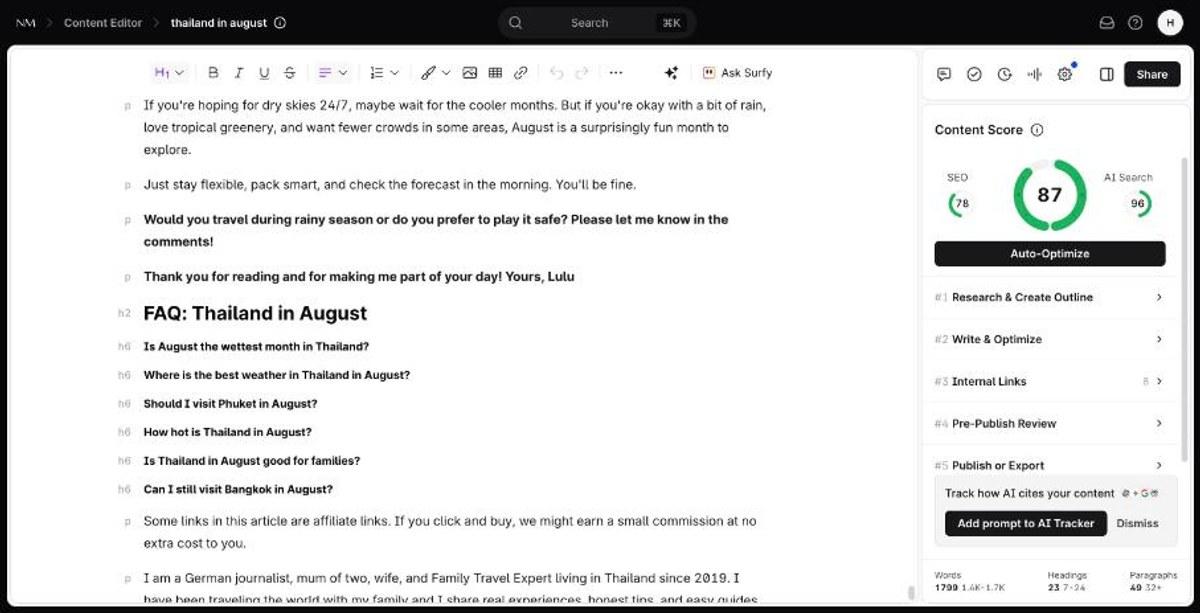
And then there are the new sentences. Written in first person, in my voice, in my post, about a country I live in:
Chiang Mai also works well for family visits to ethical elephant sanctuaries in August.
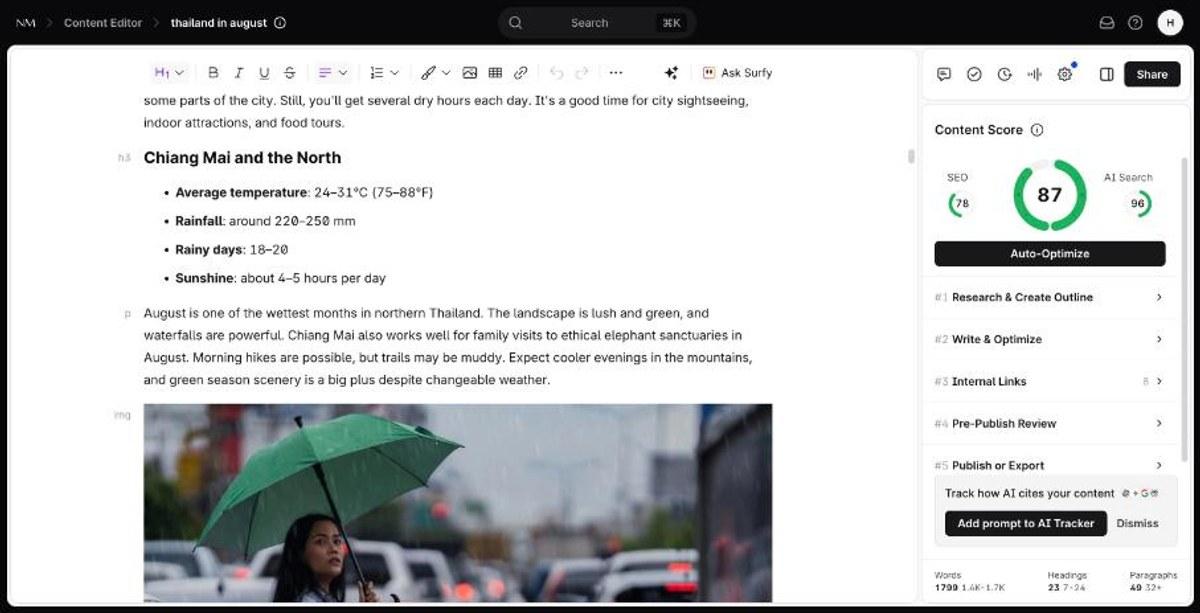
There were more: a line recommending I leave room for a pool break, a Full Moon Party date, and a sentence about Hua Hin with the place name in lower case. One passage shipped with its square brackets still visible: “August 12 marks [queen sirikit]'s birthday.” I have opinions about elephant tourism that took me years to form. Surfer does not know them, and it wrote in my voice anyway.
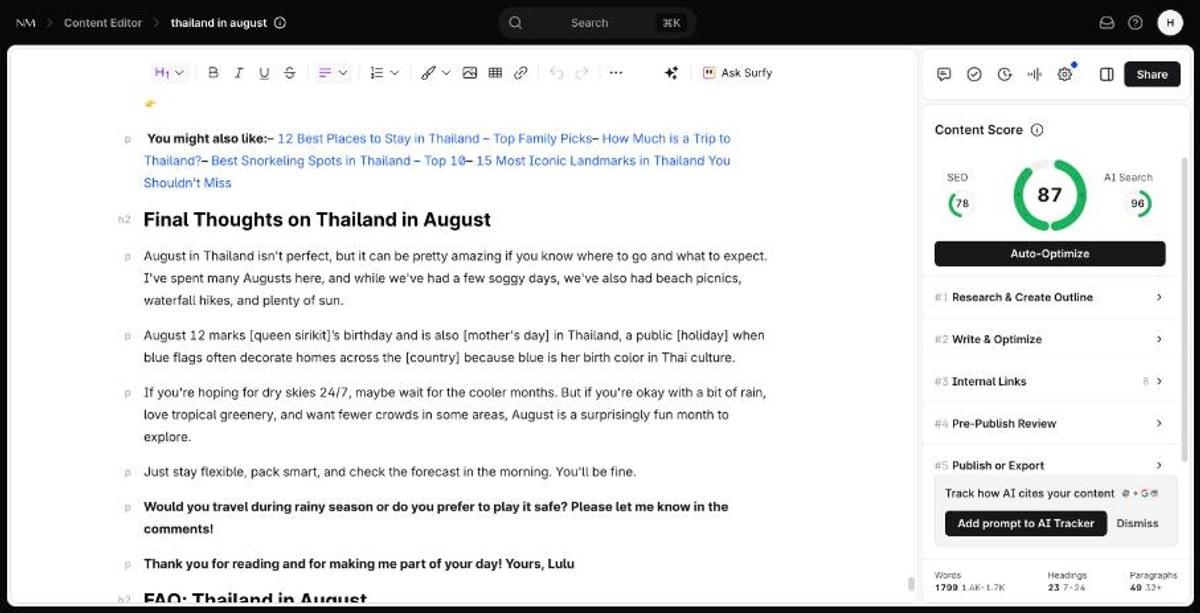
I could not separate whether the FAQ answers vanished at import or during optimization. I only measured both stages, not the boundary between them.
RightBlogger Turned My Product Links Into Visible Text
Only the import step, and that matters: RightBlogger’s rewriting features need a paid plan at 49 dollars a month. So this covers what arrives before the rewriting starts, and says nothing about the rewriting itself.
After the import, 13 of my 20 link targets were left. 5 Amazon links and a hotel link were gone, and so was my internal link behind the phrase “my honest review here,” along with the sentence it sat in. The text “Check Price” appeared 5 times but was only a link 4 times.
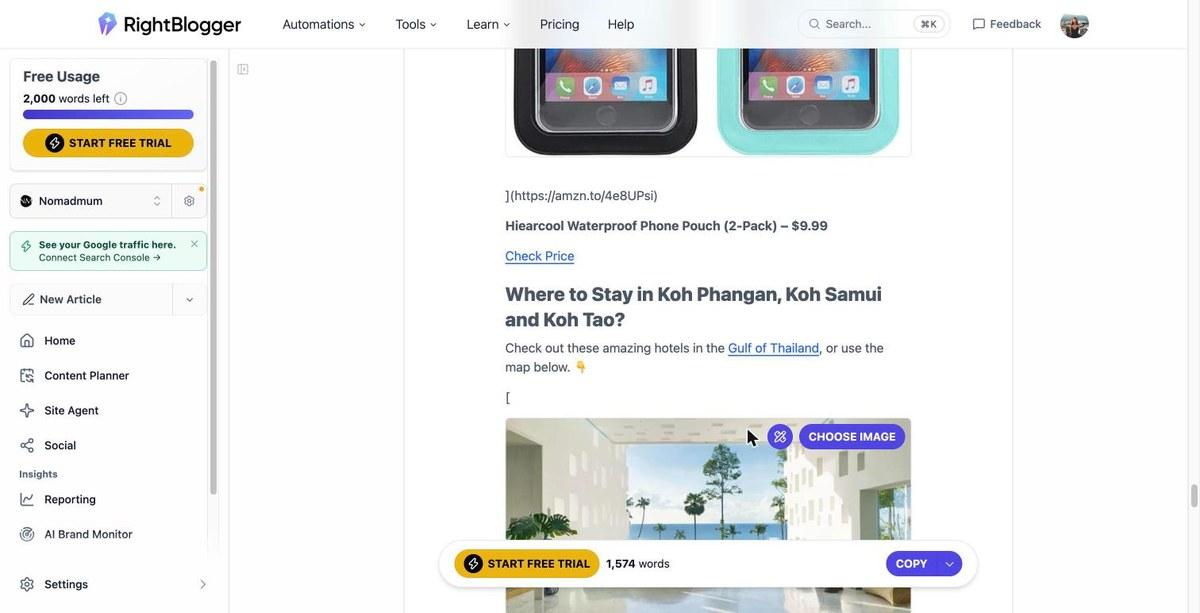
The visible symptom is the strangest thing I saw all day. Where a product image was wrapped in an affiliate link, the link fell out of the image and landed in the article as plain text: a bracket on the line above, and the raw amzn.to URL in brackets on the line below.
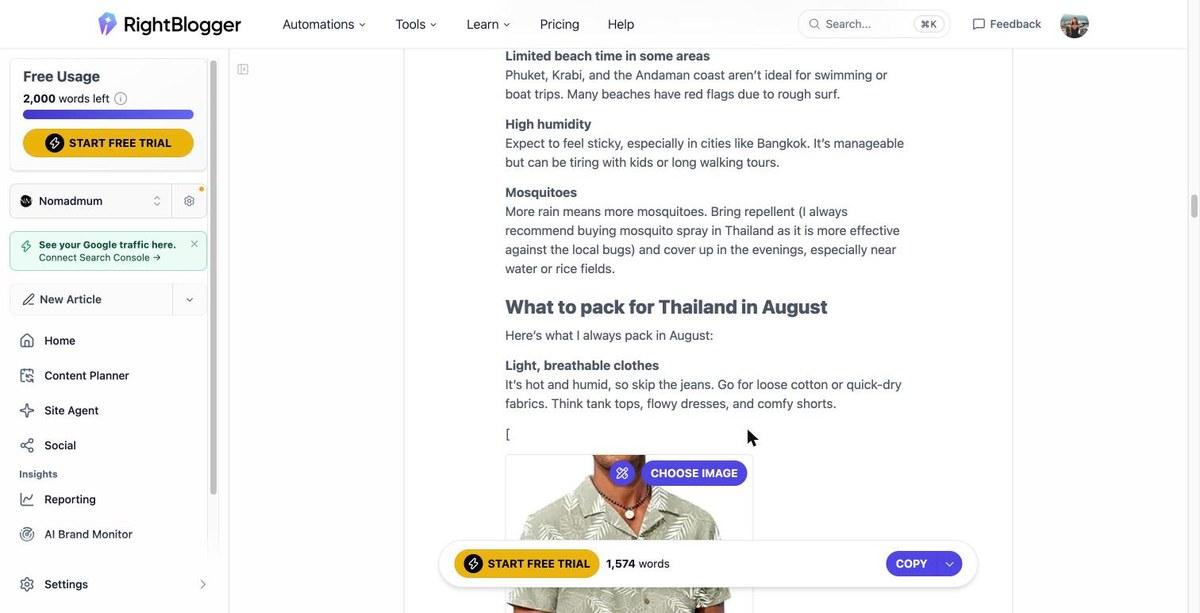
All 15 images came through, and the word count barely moved. It is the links and the widgets that did not make it.
GetGenie Does Not Take a Post, It Takes a Paragraph
GetGenie has no feature that updates a whole existing post. The tool for rewriting is Content Rewriter, and it is a plain text box: paste the sentence or paragraph you want rewritten.
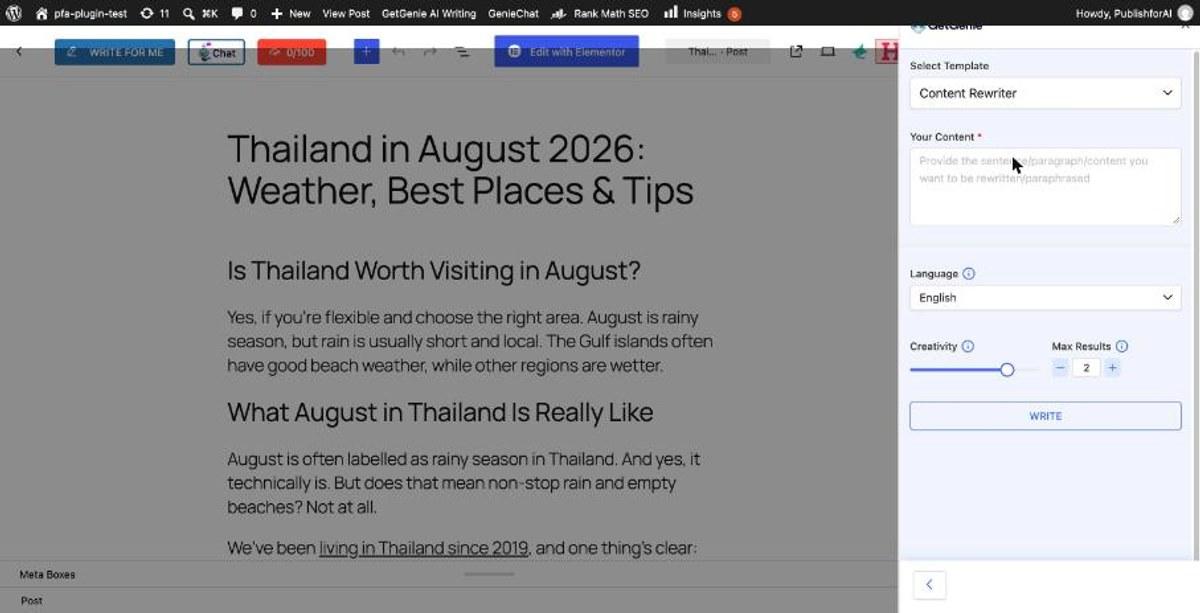
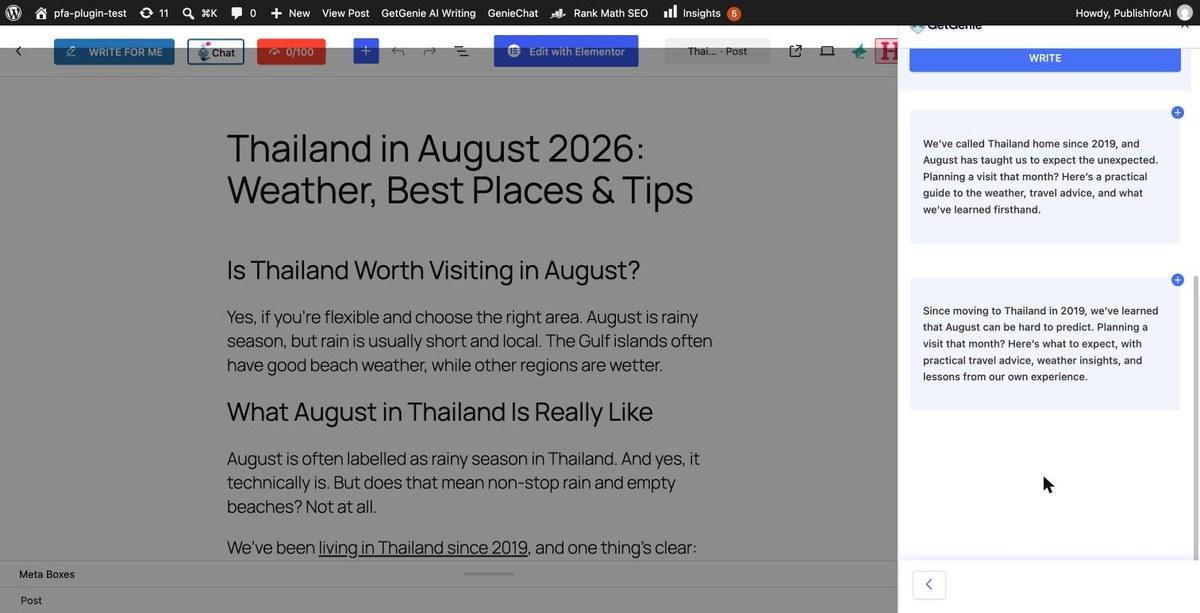
So the link question does not really apply, and that is the finding. I fed it a paragraph that contains an internal link. What came back was clean text with no link in it. Do that across a post with 12 affiliate links and you are relinking all 12 by hand, from memory, hoping you catch them all.
It also quietly changed who I am. My “my own experience” came back as “what we've learned firsthand.” Frase made my we into I, GetGenie made my I into we. Neither asked.
I ran this one on a local copy of the post, because the plugin works inside the editor.
Minty Orange Kept Everything I Measured
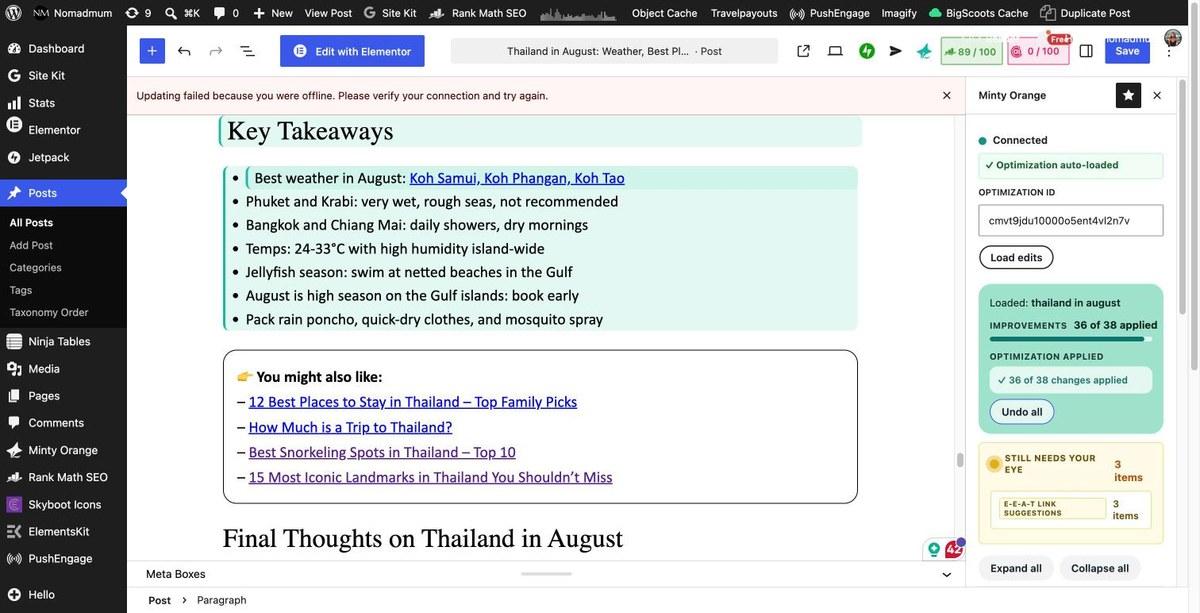
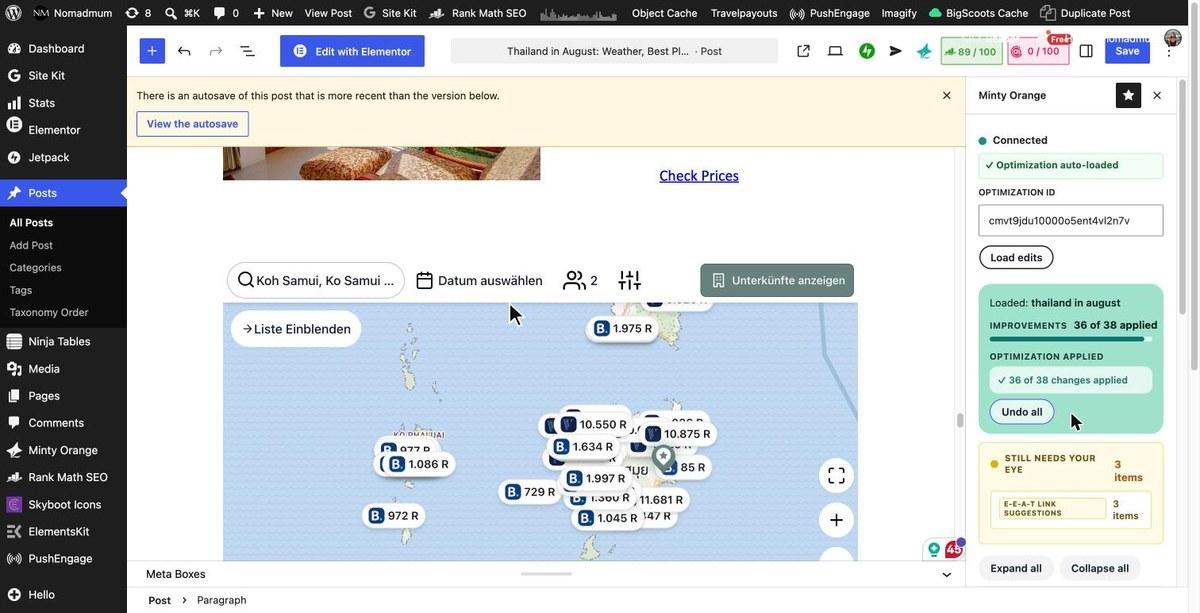
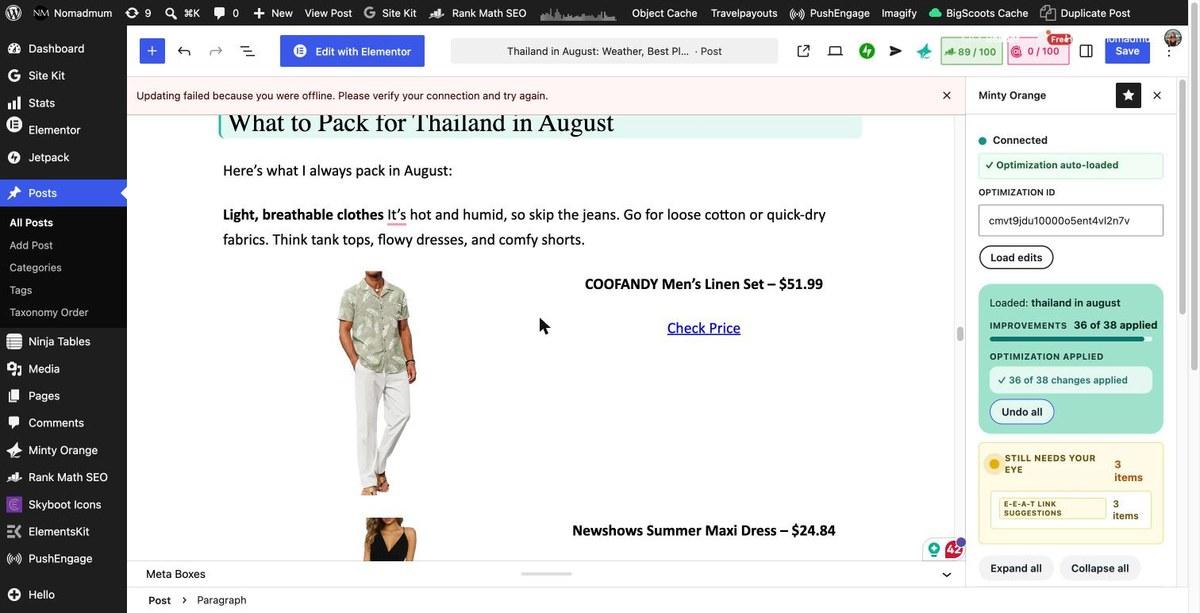
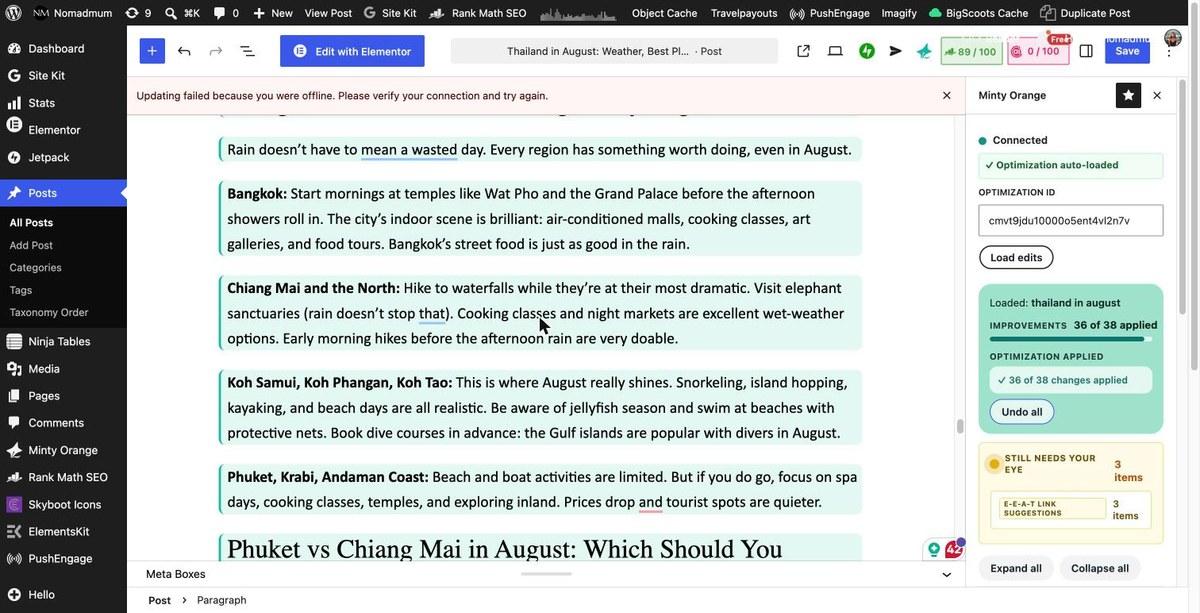
Minty Orange kept all 20 link targets, kept rel="sponsored" where it rewrote text, kept all 15 images, kept both widgets and all 6 FAQ answers, and added 3 new internal links to my other posts. The report score went from 64 to 84, and it applied 36 of its 38 suggestions.
How to Test This on Your Own Post in 20 Minutes
- 1.Pick your scariest post, not your simplest. The one with the most affiliate links and the most embeds. If a tool survives that, the rest of your archive is easy.
- 2.Count before you start. Open the post, press Ctrl+U or Cmd+U for the source, and count your links, your images and your iframes. Write the numbers down. You cannot spot a loss you never measured.
- 3.Check the rel attributes specifically. Search the source for
sponsored. That attribute is what your affiliate program and Google both expect, and it is the thing that vanished most quietly in my test, on 4 of 5 tools. - 4.Run the tool, accept its output, then count again in its editor. Not in the preview. The preview and the applied result were not the same thing in every tool I used.
- 5.Read the new sentences before anything goes live. Look for claims you would not make and facts you did not check. Your name is going on them.
If you want the longer version of the refresh workflow itself, it is in how to update old blog posts. And the broader field of what each of these tools is built for sits in the 8 best AI SEO tools for bloggers.
Key Takeaways
- ✓The 3 tools that pull your page into their own editor lost both embedded widgets, the booking map and the Pinterest pin.
- ✓4 of the 5 tools removed the rel="sponsored" attribute from affiliate links, including the tool that kept every link target.
- ✓Frase's rewrite dialog promises it keeps your links, and its own preview on the next screen announced 15 images removed. 4 of 20 link targets survived.
- ✓Surfer kept all 20 link targets and wrote new first-person sentences into the post, including a recommendation about elephant sanctuaries.
- ✓GetGenie has no whole-post update at all. Its rewriter takes pasted text and returns text with no links in it.
- ✓Minty Orange is mine, and the product boxes in this post are WordPress synced patterns, so that part of its result may not transfer to a blog built differently.
- ✓The thing to measure before you trust any of them: link targets, rel attributes, images, embeds, and whether the new sentences are ones you would sign.
Questions
Frequently Asked.
In this test, 4 of the 5 removed the rel="sponsored" attribute that affiliate programs and Google expect, and 2 of them lost link targets outright. Frase kept 4 of 20 after a full rewrite, and RightBlogger's import kept 13 of 20. Surfer kept every URL but stripped every rel attribute. This was one post on one day, so measure your own before you trust any of it.
It is what Google asks you to use to mark paid and affiliate links, and affiliate programs including Amazon ask for the disclosure attributes too. Losing it is not something your readers will see, and nobody can tell you exactly what it costs you, which is precisely why it is easy to lose without noticing. If a tool strips it across a whole archive, you have changed how every money link on your site is labelled without deciding to.
This test only measured one dimension, which is what survives a rewrite on a link-heavy, embed-heavy post. It does not measure writing quality, research, keyword data or price, and those are real reasons people pick these tools. Surfer scored best on link preservation among the tools that import your page. Frase kept the FAQ answers and the table that others dropped. Run your own scariest post through whichever tool you are considering and count, before you point it at an archive.
Every tool was used through its own feature for existing posts, on the same post, with the same keyword, so the setup favored nobody, and access is not the difference either: GetGenie is a WordPress plugin with the same reach into the same editor, and it offers no whole-post update at all. There are 2 things worth weighing. The post is mine, and its product boxes are WordPress synced patterns, so that part of the result may not transfer to a blog built differently. And I did not fact-check the new sentences my own tool added, which is exactly the failure I criticized elsewhere in this post. The raw per-tool notes are published so the numbers can be checked independently.
No. Every run stayed in the tool's own editor or draft, and the article text was never saved to the live post. The one exception worth naming is that applying changes in my own plugin writes the SEO title and meta description immediately, which it did. Everything else in this test was measured and then discarded.